Merino wool is the fine, soft wool of the merino sheep. It is one of the best sock materials there is: it stays warm even when your feet sweat, lets your skin breathe and doesn’t start to smell quickly.
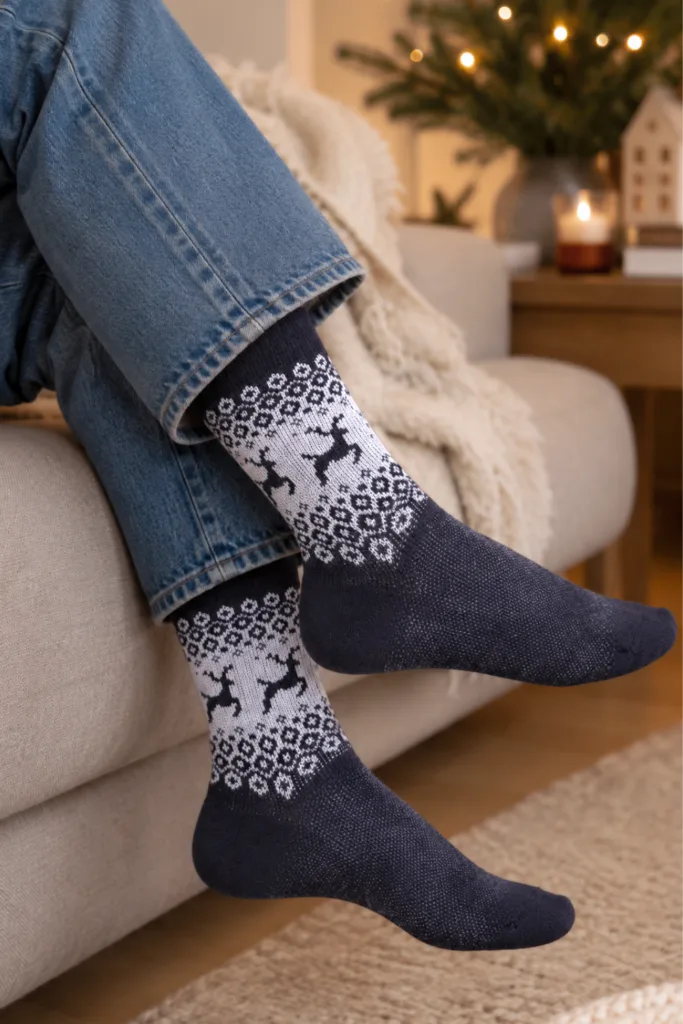
What is merino wool?
Merino wool comes from merino sheep, bred specifically for fine and long wool. A merino fibre is several times finer than ordinary sheep’s wool – usually under 24 microns, and 15–19 microns for the finest grades. For comparison, a human hair is about 50–100 microns thick.
A fine fibre bends against the skin instead of poking it. That’s why good merino wool doesn’t itch like a coarse wool sock.
Properties of merino wool
- Warm even when damp. The wool fibre can bind moisture up to about a third of its own weight without the sock feeling wet.
- Breathes and regulates temperature. Merino doesn’t let your feet overheat, so thin merino socks also work in spring and autumn.
- Slow to smell. The wool fibre binds odours and stays fresh longer than synthetic fibres.
- Elastic and springy. Merino fibre is naturally crimped, so the sock regains its shape and feels soft.
- Renewable and biodegradable. A sheep grows a new fleece every year.
Why do merino socks contain polyamide?
A pure wool sock is warm but quickly wears through at the heel and toe. That’s why polyamide and a little elastane are added to merino. You get the warmth and comfort of wool and a sock that lasts several winters. Read more: polyamide and elastane.
A little history
The merino sheep was bred in medieval Spain, and the Spanish crown guarded its valuable wool treasure so closely that exporting the sheep was banned for centuries. At the end of the 18th century merino sheep nevertheless reached Saxony and France, and in 1797 Australia. Today most of the world’s fine merino wool comes from Australia.
Tips and tricks
- Wash less often. If the sock isn’t dirty, airing it overnight is often enough – merino freshens up in the air.
- Wash inside out on a 30 °C wool cycle. Use a wool detergent, as regular powder and bleach damage the fibre. Fabric softener isn’t needed.
- Don’t dry on a radiator or in a tumble dryer. Heat and friction felt the wool and the sock shrinks. Dry flat.
- Leave room in your shoes. Wool keeps you warm thanks to the air trapped between the fibres. If the boot is too tight, even the warmest sock stays cold.
- Store clean and dry. Moths love dirt and damp. A cedar or lavender sachet in the wardrobe helps keep them away.
- Choose the thickness for the use. Thin merino socks suit everyday wear and sport; thicker cushioned ones suit hiking and frost.
Our merino wool socks
See the full range: merino socks for women · for men · for girls · for boys · merino thermal underwear
-
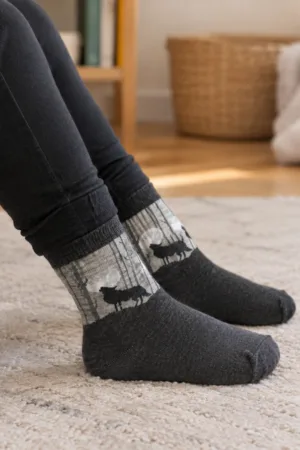
WOLF grey thermal wool socks for children
6,90 € Add to cart This product has multiple variants. The options may be chosen on the product page -
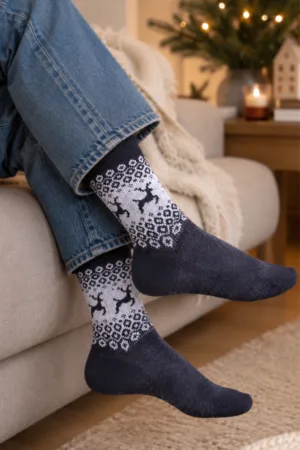
CARMEN blue merino wool socks with a winter pattern
8,90 € Add to cart This product has multiple variants. The options may be chosen on the product page -
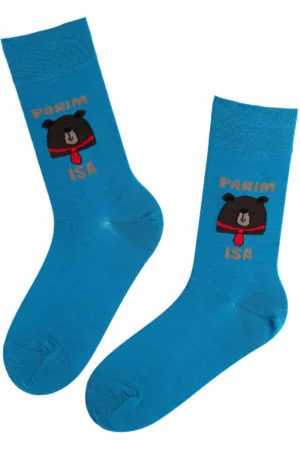
PARIM ISA blue merino wool socks with a bear
8,90 € Add to cart This product has multiple variants. The options may be chosen on the product page -
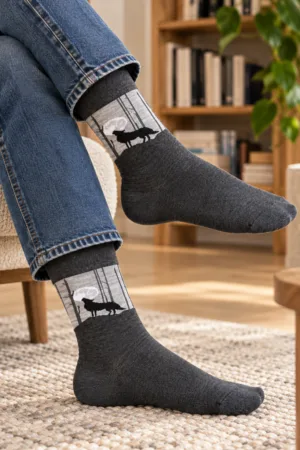
WOLF grey thermal wool socks
7,90 € Add to cart This product has multiple variants. The options may be chosen on the product page -
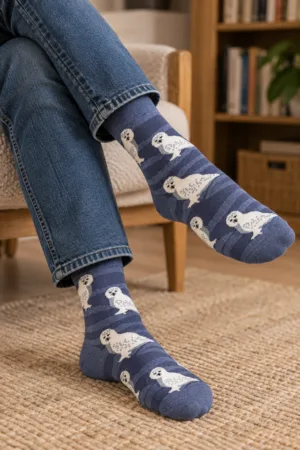
WHITE OWL blue thermal wool socks with owls
7,90 € Add to cart This product has multiple variants. The options may be chosen on the product page -

KEEP CHILLIN blue merino wool socks with a message
8,90 € Add to cart This product has multiple variants. The options may be chosen on the product page -
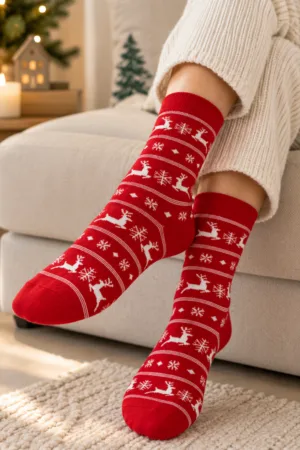
JINGLEDEER red merino wool socks with a Christmas pattern
8,90 € Add to cart This product has multiple variants. The options may be chosen on the product page -

CLASSIC grey merino wool socks with a message
7,90 € Add to cart This product has multiple variants. The options may be chosen on the product page
Frequently asked questions
Does merino wool itch?
Good merino wool doesn’t itch, because its fibres are so fine that they bend against the skin. If you are very sensitive, choose a thinner merino sock or try alpaca.
Are merino socks suitable for summer?
Yes. Thin merino socks work well in warmer weather too, because wool breathes and wicks moisture away from the skin.
How should I wash merino socks?
Inside out, on a 30 °C wool cycle with wool detergent. Dry flat, not on a radiator or in a tumble dryer.
Why do merino socks contain polyamide?
Polyamide reinforces the heel and toe, where wear is greatest. This makes a merino sock last much longer than a pure wool one.
Other materials
Viscose and bamboo · Cotton · Polyamide and elastane · Alpaca and angora · Cashmere
← All materials and comparison


