If you’ve ever pulled on a pair of thick cotton socks on a cold morning and still ended up with frozen toes by lunchtime, you already know the frustration. Cotton looks cozy, feels familiar, and costs next to nothing, but it fails at the one job a winter sock needs to do: keep your feet warm when conditions turn against you. That’s where wool comes in, and more specifically, where merino wool changes the game entirely.
At Sokisahtel, we’ve been selling socks since 2010, and if there’s one lesson we’ve learned from thousands of customer conversations, it’s this: once someone tries a good pair of wool socks, they never go back to cotton for cold weather. Not once. We carry merino, alpaca, angora, and cashmere wool socks because we’ve seen firsthand how the right wool transforms the way people feel about their feet, in Estonian winters and beyond.
This guide covers everything worth knowing about wool socks: why they outperform every other material, what separates merino from alpaca from angora, how to pick the right pair for hiking versus office wear versus lounging at home, and how to care for them so they last for years. Whether you’re a complete wool skeptic or already a convert looking to upgrade, you’ll find answers here.
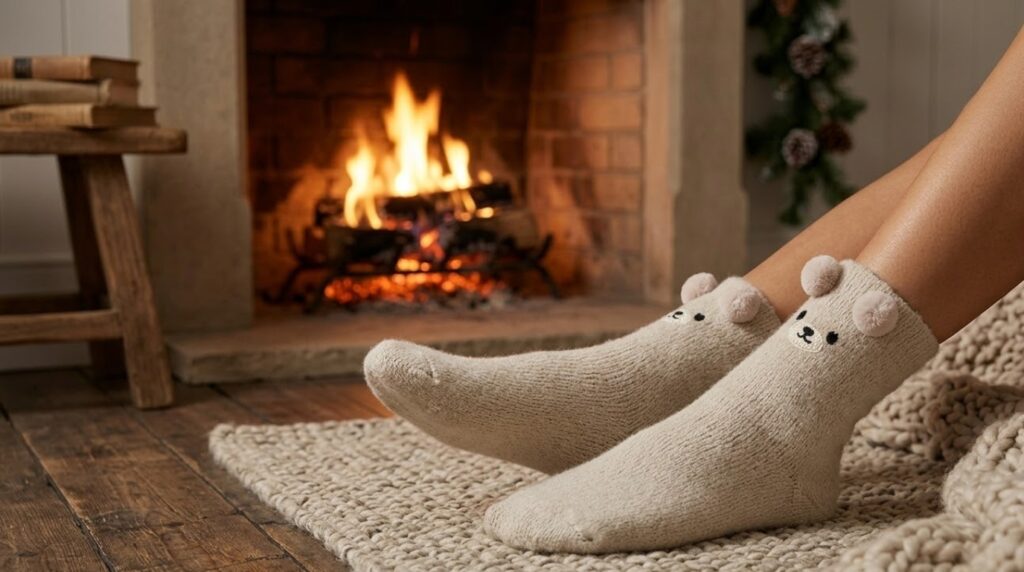
Why Wool Socks? What Makes Them Different from Everything Else
The question isn’t really “why wool?”, it’s “why did it take us so long to figure out what sheep have known for millennia?” Wool is the original performance fabric. Long before anyone invented CoolMax or Dri-FIT, wool was quietly doing everything those synthetic technologies try to replicate: regulating temperature, managing moisture, resisting odor, and lasting through years of hard use. The difference is that wool does all of it simultaneously, naturally, and without any chemical treatments.
Temperature Regulation That Actually Works Both Ways
Here’s something that surprises most people: wool socks aren’t just for winter. The fiber structure of wool creates millions of tiny air pockets that trap warmth when it’s cold outside, but these same pockets allow excess heat and moisture to escape when temperatures rise. It’s a natural thermostat that no synthetic fiber has fully matched. This is why shepherds in Scotland and farmers in Australia, two wildly different climates, have both relied on wool for centuries. Your feet stay warm at -15°C and comfortable at +25°C in the same pair of socks. We’ve had customers in Tallinn tell us they started wearing their merino wool socks year-round after one summer, because even on hot July days, their feet stayed cooler and drier than in cotton.
Moisture Management: The Reason Your Cotton Socks Feel Clammy
Your feet produce roughly half a pint of sweat per day, more during exercise, stress, or warm weather. Cotton absorbs this moisture like a sponge and holds onto it, pressing wet fabric against your skin for hours. The result? That cold, clammy feeling in winter. Blisters during hikes. Bacteria thriving in the dampness, producing that unmistakable sock smell by the end of the day.
Wool works completely differently. It can absorb up to 30% of its own weight in moisture before it starts to feel even slightly damp. More importantly, it doesn’t just sit there holding the water, wool actively moves moisture from the skin surface to the outer layer of the fabric, where it evaporates into the air. The technical term is “moisture wicking,” and wool does it better than any other natural fiber. Your skin stays dry, friction drops, blisters don’t form, and the bacteria that cause odor simply can’t get a foothold in the dry environment next to your skin.
Natural Odor Resistance (Yes, You Can Wear Them Multiple Days)
This is the benefit that converts the most skeptics. Wool fibers contain lanolin, a natural wax produced by sheep, that has genuine antibacterial properties. It actively inhibits the growth of the bacteria responsible for foot odor. The practical result? You can wear a good pair of merino wool socks for two, sometimes three days before they develop any noticeable smell. Try that with cotton and you’ll clear a room. Hikers and long-distance travelers figured this out years ago, and it’s one of the main reasons serious outdoor brands have almost universally switched from cotton to merino for their sock lines. For everyday life, it means fewer socks in the laundry basket and less time washing.
Durability That Justifies the Price
Quality wool fibers can bend more than 20,000 times before they break. Cotton fibers give up after about 3,000 bends. This isn’t a marginal difference, it’s an order of magnitude. In practical terms, it means that a well-made pair of wool socks will hold its shape, maintain its cushioning, and keep performing for 2-5 years of regular wear. Cotton socks thin out, lose their elasticity, and develop holes far sooner. When you divide the price by the number of wears, wool socks often end up costing less per wear than their cheaper cotton alternatives. At Sokisahtel, we’ve had customers come back for the same merino socks three years later, not because the first pair wore out, but because they wanted more pairs in different colors.
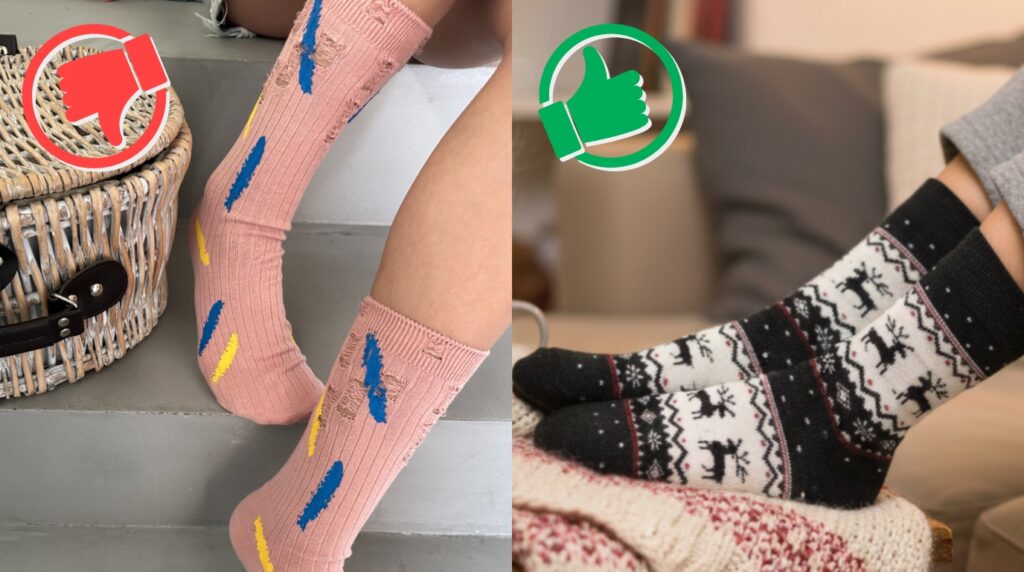
Types of Wool: From Budget-Friendly to Pure Luxury
Not all wool is created equal. The type of animal, the breed, and even the specific part of the fleece determine how soft, warm, and durable the resulting sock will be. Here’s what you’ll encounter when shopping for wool socks, roughly ordered from most common to most luxurious.
Merino Wool, The One We Recommend Most Often
Merino wool comes from Merino sheep, originally bred in Spain and now raised primarily in Australia and New Zealand. What makes merino special is the fineness of its fibers, typically 15-24 microns in diameter, compared to 25-40 microns for regular sheep’s wool. That difference might sound academic, but you feel it instantly when you put on a merino sock: it’s soft, smooth, and nothing like the scratchy wool sweater your grandmother knitted.
Merino is the gold standard for sock production because it combines every advantage of wool, temperature regulation, moisture wicking, odor resistance, durability, with a next-to-skin comfort that rivals cashmere at a fraction of the price. If you’ve avoided wool socks your entire life because you assumed they’d be itchy, merino is the one that will change your mind. It’s the type we sell the most at Sokisahtel, and the one we personally wear through Estonian winters. Browse our merino wool sock collection to see the full range.
Traditional Sheep’s Wool, Maximum Warmth, Honest Price
Regular sheep’s wool uses thicker fibers (25-40 microns) that provide outstanding insulation but feel noticeably coarser against the skin. These are the chunky, rugged socks your grandparents wore, and there’s a good reason they’ve been around for centuries. When maximum warmth is the priority and you don’t mind a bit of texture, traditional wool socks deliver incredible value. They’re perfect for wearing inside boots where the sock isn’t directly rubbing against sensitive skin, or for layering over a thinner liner sock during extreme cold. They’re also significantly cheaper than merino, making them a practical everyday choice for outdoor work in winter.
Alpaca Wool, Lightweight Warmth for Sensitive Skin
Alpaca fiber is genuinely remarkable. It’s hollow, unlike sheep’s wool, which is solid, which makes it lighter and warmer per gram than almost any other natural fiber. Alpaca wool is also naturally hypoallergenic because it contains no lanolin, making it the best option for people who experience skin reactions to sheep’s wool. The texture is silky and soft, somewhere between merino and cashmere in feel, and it drapes beautifully in a knitted sock. The downside is price, alpaca socks are a premium product, and slightly less elasticity than merino, so they can lose their shape faster if not cared for properly. We carry a selection of alpaca wool socks for customers who want that combination of extreme softness and hypoallergenic properties.
Angora Wool, The Softest You’ll Ever Feel
Sourced from Angora rabbits, this fiber is in a class by itself when it comes to pure softness. Angora has a distinctive fluffy, almost cloud-like texture that feels incredibly luxurious against the skin. It’s also very warm for its weight. The catch is that pure angora is fragile and pills easily, which is why it’s almost always blended with merino or nylon to add structure and durability. Angora blend socks are best for low-activity, indoor wear, curled up on the couch, padding around the house on a Sunday morning. They make exceptional gifts because the softness factor is immediately obvious the moment someone pulls them out of the box. You’ll find angora blend socks in our wool collection.
Cashmere, Pure Indulgence
Cashmere comes from the undercoat of cashmere goats and is the finest, lightest, and most expensive wool available. Cashmere socks feel like wearing a whisper, impossibly soft, feather-light, and warm beyond what their thinness would suggest. They’re also the least durable option on this list, which is why they’re best treated as a luxury item rather than an everyday workhorse. A pair of cashmere socks is the kind of gift that makes someone’s eyes widen when they feel the fabric. Not for hiking. Not for the gym. But for a cold evening at home with a glass of wine? Unbeatable.

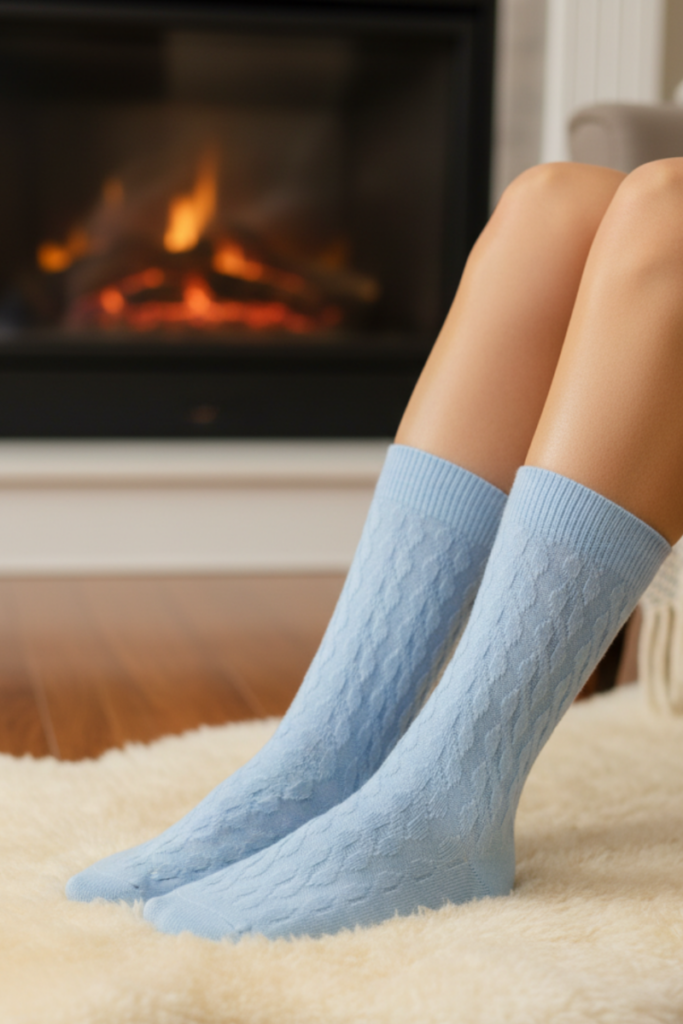
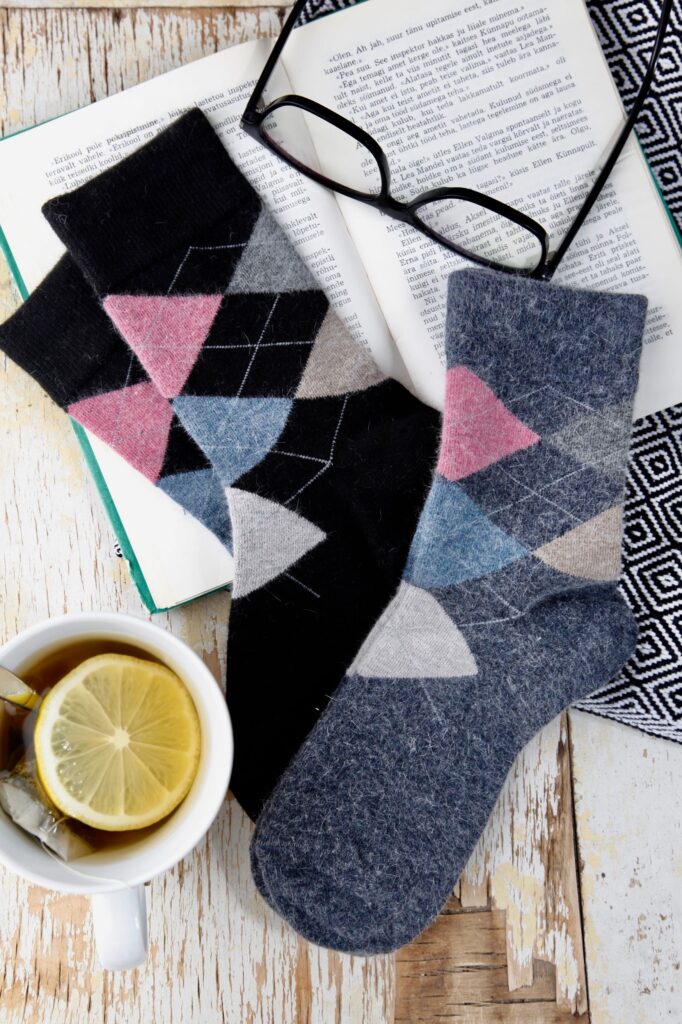
Choosing Wool Socks for Every Activity
The best wool sock for hiking is not the best wool sock for the office. Thickness, height, cushioning, and blend all matter depending on what you’re doing. Here’s how to match your wool socks to your activities.
Hiking and Trail Walking
For hiking, merino wool in medium or heavy weight is the undisputed champion, and there’s a reason every serious outdoor brand has adopted it. You want socks with reinforced heels and toes (these areas take the most punishment on the trail), cushioned soles that absorb impact on rocky terrain, and a snug fit around the arch that prevents the sock from bunching inside your boot. Bunching leads to hot spots, and hot spots lead to blisters, the number one complaint on any multi-day hike. The moisture-wicking properties of merino keep your feet dry even during strenuous climbs, and the temperature regulation means your feet stay comfortable whether you’re ascending a sun-baked ridge or descending into a cool, shaded valley. Crew or mid-calf length is essential for hiking boots, as it prevents the boot collar from rubbing directly against your skin.
A pro tip from our customers who hike regularly: bring a dry pair of merino socks for the evening at camp. Changing into fresh, dry wool socks after a long day on the trail is one of the simplest luxuries in outdoor life, and your feet will recover significantly faster overnight.
Everyday Winter Wear
For commuting, working, and general cold-weather daily life, a medium-weight merino blend in crew or mid-calf length is ideal. These socks are thin enough to fit comfortably inside your regular shoes and boots, no need to size up your footwear, while providing dramatically more warmth than cotton. The key word here is “blend”: a composition of 60-70% merino with 30-40% nylon and elastane gives you merino’s warmth and moisture management with added durability and stretch. Pure merino is wonderful but can wear through faster in high-friction areas; the nylon reinforcement solves that. Choose darker colors (navy, charcoal, black) for work and bolder patterns or cable knits for weekends and casual wear. Our warm sock collection for women and men’s sock selection include a range of merino blends perfect for Estonian winters.
Running and Athletic Training
Lightweight merino running socks have quietly revolutionized athletic footwear over the past decade. Early adopters in the ultrarunning community discovered that merino outperformed synthetics on long distances, fewer blisters, less odor, better temperature management over hours of continuous effort. Now even mainstream running brands have merino options. For athletic use, look for thin, lightweight merino (not the thick hiking weight) with reinforced high-impact zones at the heel and ball of the foot, a compression band around the arch for support, and flat or seamless toe seams that eliminate friction points. Ankle or quarter length is standard for running; crew length works well for cross-training and gym work where you want slightly more coverage. You can find athletic options in our athletic sock collection.
Skiing and Winter Sports
Ski socks have a specific set of demands that differ from general warm socks. They need to be thin enough to fit precisely inside ski boots, a loose, bulky sock inside a ski boot creates pressure points and reduces your control over the ski. At the same time, they need strategic cushioning at the shin (where the boot tongue presses), the ankle (where buckles create pressure), and the sole (for impact absorption). The rest of the sock should be relatively thin for a precise fit. Merino wool is ideal here because it provides warmth without bulk, and its moisture management prevents the clammy, cold feeling that ruins a day on the slopes. Look for knee-high length that extends above the top of your ski boot, with flat seams throughout.
Lounging at Home
This is where you can abandon all practical considerations and just go for maximum coziness. Thick cable-knit wool socks, fluffy angora blends, cashmere-infused slipper socks, these are the socks you reach for on a rainy Sunday or a dark December evening. They’re not optimized for performance or durability; they’re optimized for that feeling of pure comfort when you sink into the couch with a warm drink. If you’re buying wool socks as a gift, this category almost always gets the best reaction. There’s something deeply satisfying about giving someone a pair of socks that makes them go “oh, these are SO soft” the moment they touch them. Browse our full wool collection for cozy home options.
How to Care for Wool Socks (So They Last for Years)
Proper care is the difference between wool socks that last one season and wool socks that last five years. The good news: caring for wool socks is simpler than most people think. The bad news: the dryer is their mortal enemy, and this is a hill we’re willing to die on.
Washing
Turn your wool socks inside out before tossing them in the machine. Use cold or lukewarm water, never hot, as heat causes wool fibers to felt and shrink irreversibly. A gentle or wool-specific cycle works perfectly, and most quality wool socks handle machine washing without any issues (always check the care label to be sure, but gone are the days when all wool required hand washing). Use a mild detergent, ideally one formulated for wool or delicates. Avoid bleach entirely, it destroys wool fibers. And skip the fabric softener, which coats the fibers and actually reduces their natural moisture-wicking ability. You’re paying for wool’s natural performance; don’t clog it up with chemicals.
Drying
This is the critical step. Never, ever put wool socks in the dryer. The combination of heat and tumbling causes wool to shrink and damages the fiber structure in a way that can’t be undone. Instead, gently reshape your socks after washing and lay them flat on a drying rack or towel, away from direct sunlight or heat sources. Most wool socks dry overnight at room temperature. If you’re in a hurry, placing them near (not on) a radiator speeds things up, but keep some distance, direct heat is the enemy.
Storage
Store wool socks in a cool, dry drawer. Fold them gently or lay them flat rather than balling them up, stuffing one sock inside the other stretches the elastic and deforms the cuff over time. If you’re storing them for the season (putting away your heavy winter socks in spring, for example), tuck a cedar block or lavender sachet into the drawer. Moths are attracted to natural animal fibers, and nothing ruins your autumn like discovering your favorite merino socks have become a moth nursery. Cedar and lavender are natural moth deterrents that also keep your sock drawer smelling pleasant. For more detailed care instructions, check our size chart and care guide.
Wool vs. Cotton: An Honest Comparison
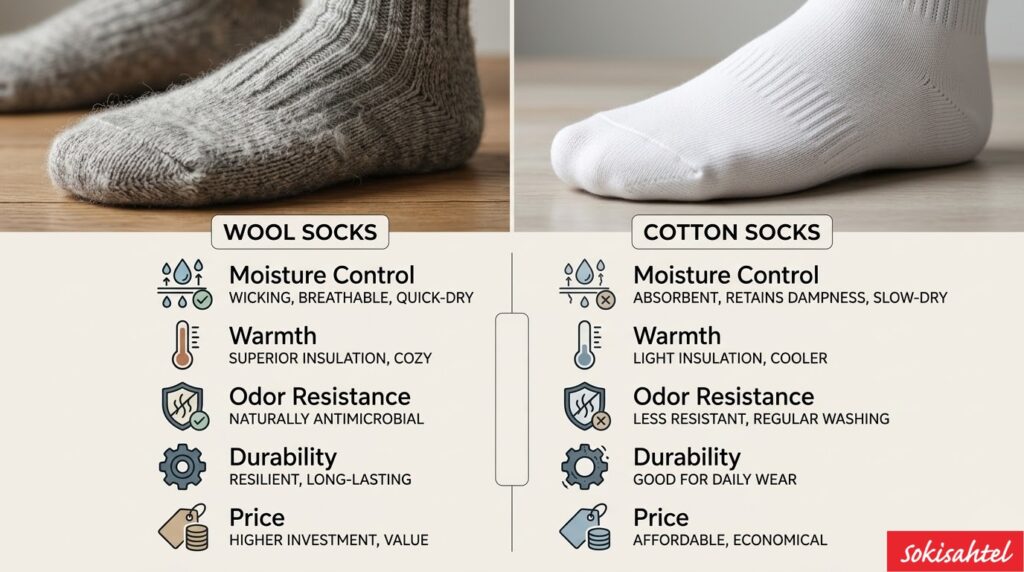
We sell both wool and cotton socks at Sokisahtel, so we have no interest in unfairly bashing cotton, it has its place. But when customers ask us to honestly compare the two, here’s what we tell them.
Moisture: Cotton absorbs water and holds it against your skin, creating a damp environment that leads to cold feet, blisters, and odor. Wool absorbs moisture too, but then actively moves it away from your skin and releases it into the air. Your feet stay dry in wool; they don’t in cotton.
Warmth: Cotton provides minimal insulation even when dry, and virtually none when wet. Wool insulates even when damp, a property that’s genuinely lifesaving in outdoor situations and extremely practical in everyday winter wear.
Odor: Cotton socks develop noticeable odor after a single day of wear, sometimes sooner. Wool’s natural antibacterial lanolin means you can wear the same pair for two or three days with no detectable smell. This isn’t marketing, it’s chemistry.
Durability: Wool fibers bend 20,000+ times before breaking; cotton manages about 3,000. Over months of wear, this translates directly into socks that keep their shape and cushioning versus socks that thin out and develop holes.
Price: Cotton wins on upfront cost, no question. A pair of cotton socks might cost €3-5, while quality merino starts at €8-15. But when you factor in how much longer wool lasts and how many fewer pairs you need to buy over time, the cost per wear often favors wool. And the comfort difference is not even close.
Our honest recommendation? Keep cotton socks for hot summer days when you need something ultra-light and disposable. For everything else, winter, hiking, travel, work, sports, wool is the better investment. Browse our cotton socks for summer and our wool collection for the rest of the year.
Frequently Asked Questions
Are wool socks good for summer?
Yes, and this surprises almost everyone who asks. Lightweight merino wool socks are genuinely excellent for summer wear. The natural breathability and moisture-wicking properties keep your feet cooler and drier than cotton in warm weather. The key is choosing thin, lightweight merino, not the thick hiking socks designed for winter. A fine-gauge merino sock in summer feels cool, dry, and almost silky against the skin. We have customers who switched to merino year-round and report that their feet sweat less in summer than they did in cotton.
Do wool socks make your feet itch?
Traditional wool with thick, coarse fibers (above 25 microns) can absolutely cause itching, this is what gives wool its scratchy reputation. Modern merino wool socks use fibers so fine (15-24 microns) that they bend against your skin rather than poking it like little needles. The sensation is completely different: soft, smooth, and comfortable even for people who normally can’t tolerate wool. If you’ve avoided wool socks because of itchiness, merino specifically will change your experience entirely. And if even merino feels too much, alpaca wool is the most hypoallergenic natural option available.
How long do wool socks last?
With proper care (cold wash, air dry, no dryer), quality wool socks typically last 2-5 years of regular wear. The exact lifespan depends on the blend (pure merino wears faster than merino-nylon blends), the activity (hiking puts more stress on socks than office wear), and how often you rotate your pairs. Having 5-7 pairs in rotation for daily wear extends each pair’s life significantly because the fibers have time to recover between wears.
Can you wear wool socks if you’re allergic to wool?
Most people who believe they’re allergic to wool are actually sensitive to the coarse fibers in traditional wool, it’s a mechanical irritation, not a true allergy. Fine merino rarely causes these reactions. For people with confirmed wool sensitivity, alpaca wool is the best alternative: it’s naturally hypoallergenic because it contains no lanolin (the substance some people react to in sheep’s wool). That said, if you have a diagnosed wool allergy, consult your doctor before trying any animal fiber product. Our bamboo viscose socks are also an excellent non-wool option that shares many of wool’s benefits.
Are wool socks worth the price?
We’re obviously biased, but we genuinely believe so, and our customers’ repeat purchases back this up. While wool socks cost more upfront than cotton (typically €8-15 vs €3-5 per pair), they last 3-5x longer, perform dramatically better in cold and wet conditions, and provide a level of comfort that makes getting dressed in the morning just a little bit nicer. When you calculate cost per wear, wool often comes out cheaper. And there’s no price tag on the feeling of warm, dry feet on a -20°C Estonian morning.
How many pairs of wool socks do I need?
For daily winter wear, 5-7 pairs allow you to rotate through a full week with time for washing and drying. For hiking specifically, 2-3 good pairs handle most trips, merino’s odor resistance means you can genuinely wear a pair for 2-3 days between washes on the trail. If you want to dip a toe in (pun intended) without committing to a full drawer of wool, start with 2 pairs: one for daily wear and one for outdoor activities. You’ll know within a week whether you’re converting.
Our Wool Sock Picks from Sokisahtel
We carry wool socks from Estonian and European producers who share our standards for quality and natural materials. Our wool sock collection includes merino, alpaca, angora, and cashmere options for women, men, and children, from everyday merino blends that handle the daily commute to luxuriously soft angora pairs that make perfect gifts.
Not sure which wool type is right for you? Our customer service team is available Monday through Friday, 9 a.m. to 5 p.m., and they’ve helped thousands of customers find their perfect wool socks. Reach out at info@sokisahtel.net or call +372 5551 0994, we’re always happy to talk socks.