Have you ever felt by the end of the day that your legs are heavy, your ankles are swollen, and your calves ache? That’s not normal “tiredness” – it’s a sign that the circulation in your legs needs support. Compression knee-high socks are a simple and comfortable solution you can wear every day, and your legs will thank you for it. And you’ll feel so much better right away!
- What are compression knee-high socks?
- How do compression knee-high socks work?
- Compression knee-high socks vs support tights – which one to choose?
- Who are compression knee-high socks suitable for?
- When should you wear compression knee-high socks?
- How to choose the right compression knee-high socks?
- Compression knee-high socks at Sokisahtel
- How to care for compression knee-high socks?
- Keep Reading
What are compression knee-high socks?
Compression knee-high socks are specially designed knee-high socks that apply graduated pressure to the legs. The pressure is strongest around the ankle and gradually decreases up toward the calf. This is not accidental – this type of graduated compression helps blood flow from the legs back toward the heart instead of pooling in the veins.
Unlike regular knee-high socks, compression knee-high socks are made from a denser knit and special materials that ensure precise and even pressure. They are not just “stronger socks,” but a thoughtfully designed product that does good for your legs.
How do compression knee-high socks work?
Inside the veins in our legs are small valves that are meant to prevent blood from flowing backward. When you stand or sit for long periods, the blood has to move against gravity, from the legs back up to the heart. Over time, these valves can weaken, and blood begins to pool in the veins. The result: swelling, a feeling of heaviness, and varicose veins.
Compression knee-high socks help improve this in several ways. Graduated pressure supports the vein walls and helps the valves work more effectively. Circulation improves, swelling decreases, and the legs feel significantly less tired. Many people say they notice the difference on the very first day.
Compression knee-high socks vs support tights – which one to choose?
This is one of the most common questions, and the answer depends entirely on your needs.
Compression knee-high socks cover the leg from the ankle to the knee. They are ideal if your main concern is your calves and ankles. That is where most swelling and heaviness usually occur. Knee-high socks are easy to put on, they don’t become uncomfortable in warmer weather, and they go well with skirts, trousers, and dresses.
Support tights cover the entire legs and reach up to the waist. They are a better choice if you need support in the thigh area as well, or if you wear skirts and want a more even overall look. But in warm weather, tights can start to feel too hot.
In practice, many people choose compression knee-high socks for everyday wear because they are more comfortable, quicker and easier to put on, and suitable for any weather. If you want to learn more about support tights, read our guide to support tights and compression stockings.
Who are compression knee-high socks suitable for?
They’re not just “a grandma thing.” Compression knee-high socks are suitable for practically anyone who spends long days on their feet. Here are some of the customers who have made compression knee-high socks their go-to favorite.
People who work on their feet. Sales assistants, hairdressers, chefs, teachers, healthcare workers. Anyone who stands for several hours a day and feels heaviness in their legs by the evening. Compression knee-high socks reduce that noticeably.
Office workers. Sitting for long periods also puts strain on the legs – circulation slows down and the legs begin to swell. Compression knee-high socks keep the blood moving even when you are not.

Travelers. Long flights and bus rides are especially hard on the legs. Tight seating positions and dry cabin air increase the risk of swelling and deep vein thrombosis. Compression knee-high socks are an essential part of any frequent traveler’s gear.
Pregnant women. During pregnancy, the volume of fluid in the body increases, and the growing uterus puts pressure on the pelvic veins. Legs become swollen, especially in the second and third trimesters. Compression knee-high socks are a comfortable alternative to maternity tights, especially in warmer weather.
Athletes and active people. After exercise, compression knee-high socks help speed up recovery by reducing muscle fatigue and swelling.
People with varicose veins. If you already have varicose veins, compression knee-high socks help keep the condition under control and prevent it from getting worse.
When should you wear compression knee-high socks?
The best time is in the morning, before your legs have a chance to swell. Put on compression knee-high socks right after waking up or before going to work. Wear them throughout the day and take them off in the evening.
Some specific situations where compression knee-high socks are especially useful: long workdays spent on your feet, flights and long car journeys, daily wear during pregnancy, recovery after exercise, and warm summer days when your legs tend to swell more.
One common mistake is wearing compression knee-high socks only once your legs already start to hurt. In reality, they work best as a preventive measure. Wear them before the problem appears.
How to choose the right compression knee-high socks?
When choosing compression knee-high socks, there are three important things to consider: the compression level, the size, and the material.
Compression level. For everyday preventive wear, knee-high socks with light compression are the best choice. They provide enough support to keep your legs feeling good, but do not require a doctor’s recommendation. Medical knee-high socks with stronger compression (Class II and III) are intended for treating more serious conditions and should be chosen together with a doctor.
Size. The right size is critically important when it comes to compression knee-high socks. A sock that is too large will not provide enough pressure, while one that is too small may dig in and do more harm than good. Measure the circumference of your ankle and the widest part of your calf to find the right size for you.
Material. High-quality compression knee-high socks are made from polyamide and elastane, which ensure durability and the right level of compression. Some styles also include cotton for added comfort.
Compression knee-high socks at Sokisahtel
Our selection includes compression knee-high socks for every taste, both patterned and classic styles.
Our COMPRESSION knee-high socks are the newest addition to the line, proving that something beneficial for your health doesn’t have to be boring. Designed with graduated compression, they help improve circulation and reduce leg fatigue — all while keeping the stylish look that is so typical of us.
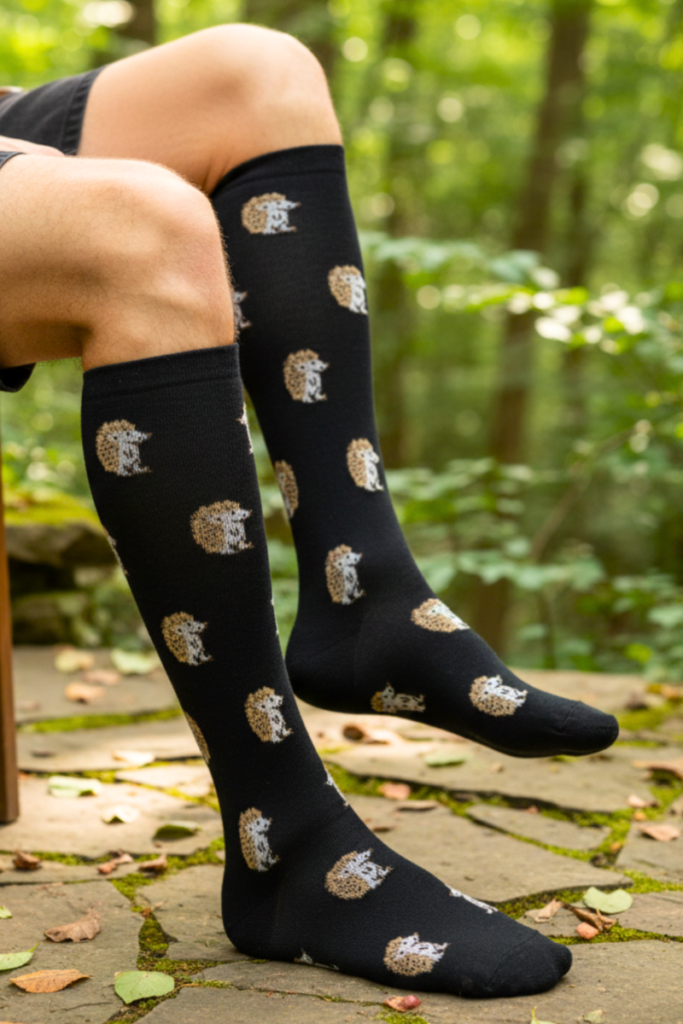
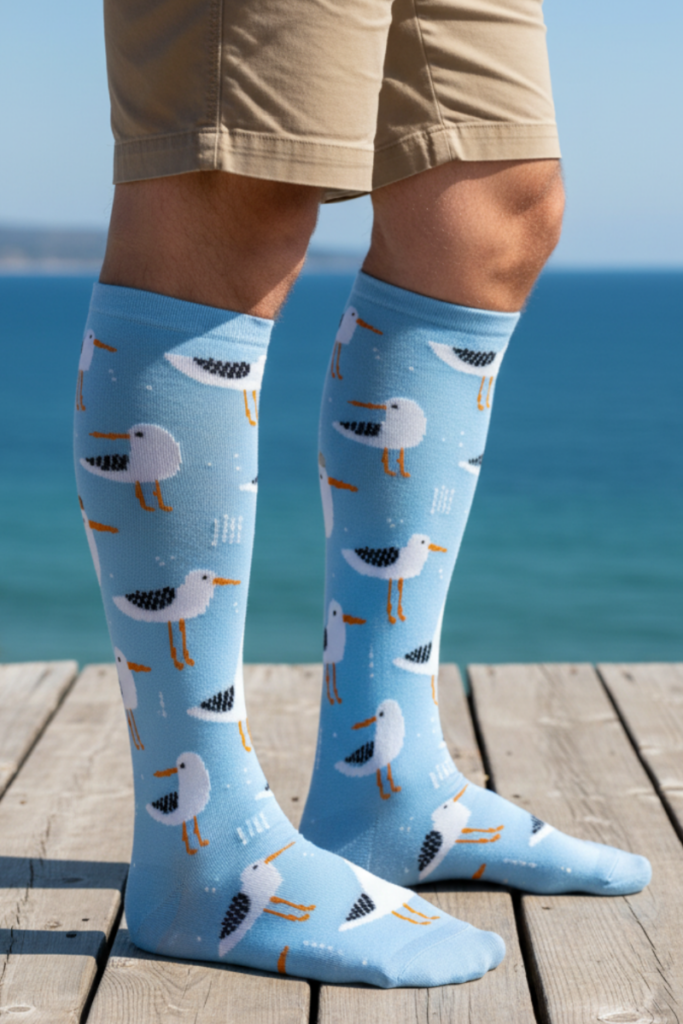
With seagull patterns, as well as hedgehog and mushroom designs. The COMPRESSION collection is available in both men’s and women’s sizes.
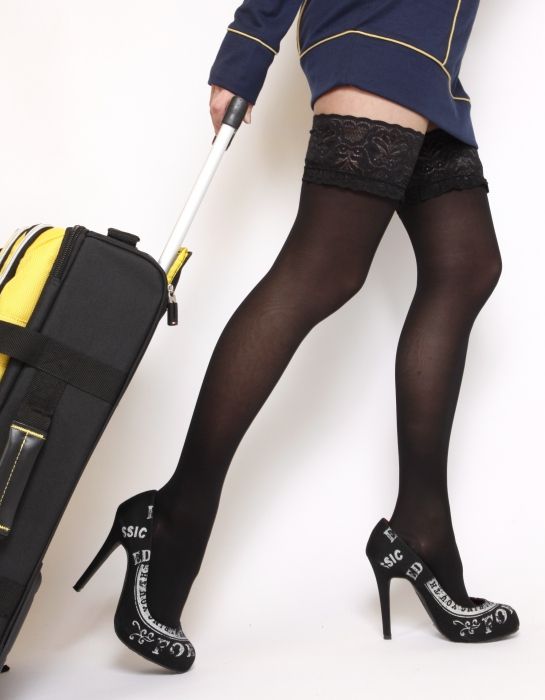
VARIS support knee-high socks and stockings are classic products with a medical background, made with a strong knit and an anatomical fit. Available in 70 DEN and 140 DEN, in black and nude.
Travel knee-high socks are designed mainly for longer journeys, but they are also suitable for everyday wear. ECOCARE 40 DEN travel knee-high socks are made from recycled nylon. RELAX 20 DEN Travel knee-high socks feature a sole with a gentle massage effect.

How to care for compression knee-high socks?
Proper care extends the lifespan of compression knee-high socks and helps preserve their compression.
Wash them by hand or in the washing machine at 30°C on a gentle cycle. Do not use fabric softener, as it damages the elastic fibers and causes the compression to weaken more quickly. Dry them flat, not in a dryer or on a radiator. Buy at least 2-3 pairs so you can alternate them and let them rest between washes. Replace your compression knee-high socks every 3-6 months, as the compression gradually weakens with wear and washing.
Compression knee-high socks are a simple investment that does your legs good every day. Whether you stand at work, sit in an office, travel, or are pregnant, your legs deserve support. And as our COMPRESSION line shows, that support can look very stylish too!
Keep Reading
Curious about other types of compression socks and how they can help your legs?
- Compression Socks Benefits: Who Needs Them and Why They Work, the science behind graduated compression, from improving blood flow to preventing DVT during travel.
- Thigh-High Compression Socks: The Complete Buying Guide, when full-length compression stockings are the better choice and how to find the right pair for post-surgery recovery or varicose veins.