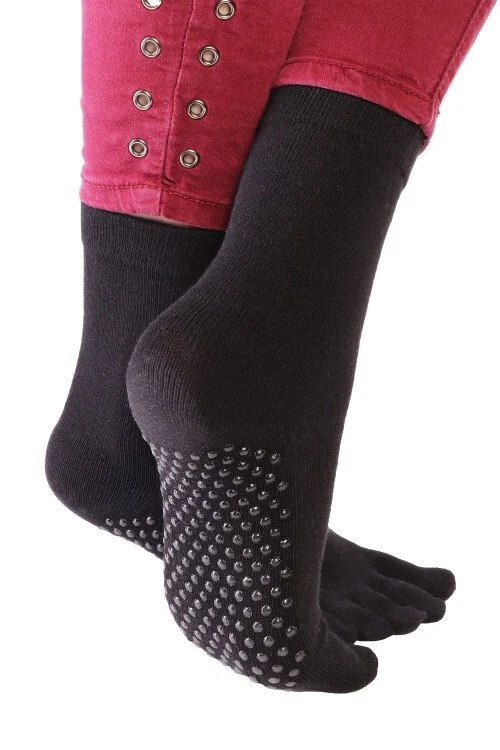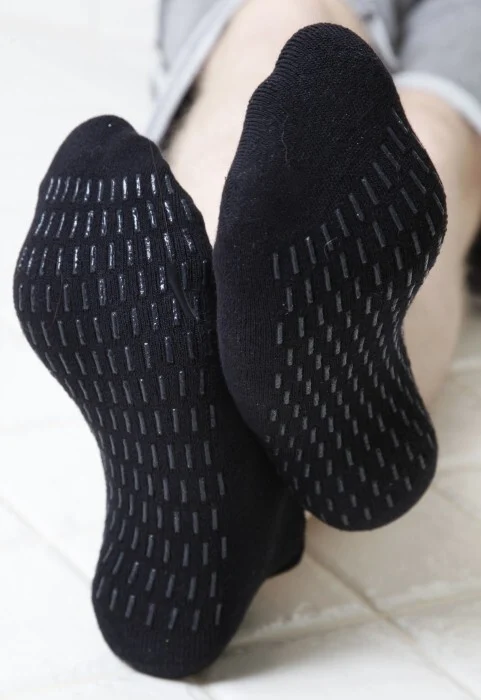
Free shipping to parcel machines from 40 EUR Customer service Mon-Fri 9-19, Sat 10-18, Sun 10-17 | tel. 5551 0994 Discount coupon when you join our newsletter
EN ET RU

Category: Health and sport

  • Compression Knee-High Socks: What Are They, and Why Do Your Legs Need Them?

    Compression Knee-High Socks: What Are They, and Why Do Your Legs Need Them?

    Have you ever felt by the end of the day that your legs are heavy, your ankles are swollen, and your calves ache? That’s not normal “tiredness” – it’s a sign that the circulation in your legs needs support. Compression knee-high socks are a simple and comfortable solution you can wear every day, and your legs will thank you for it. And you’ll feel so much better right away!

    What are compression knee-high socks?

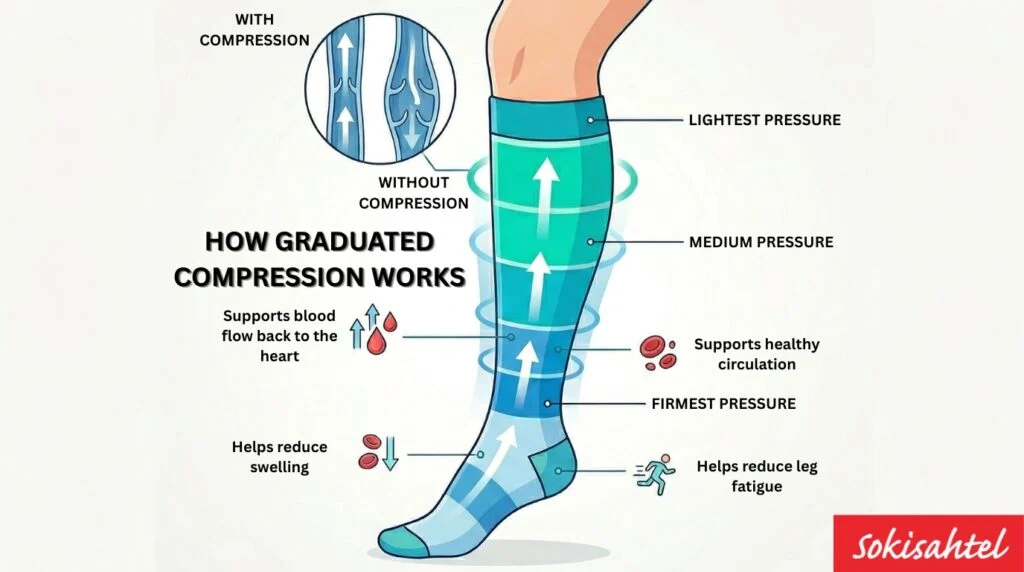
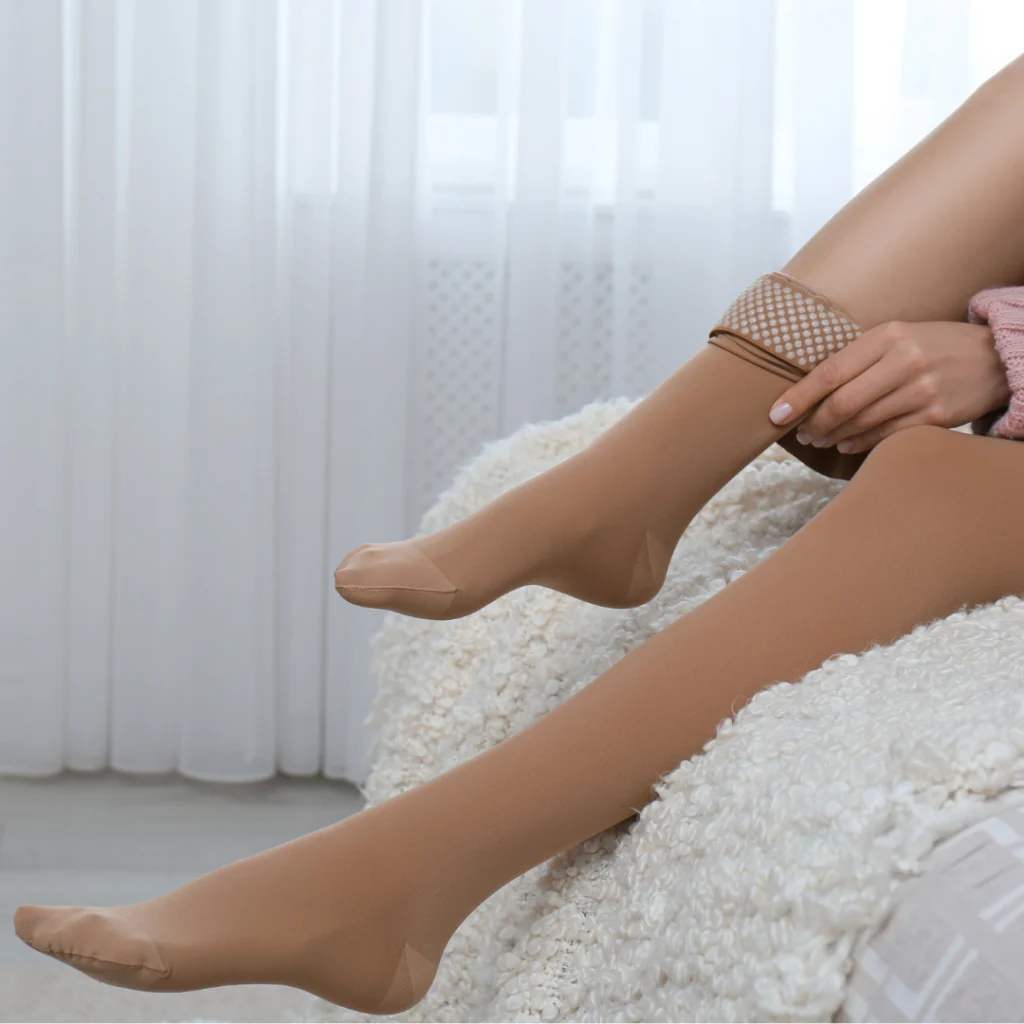
    Compression knee-high socks are specially designed knee-high socks that apply graduated pressure to the legs. The pressure is strongest around the ankle and gradually decreases up toward the calf. This is not accidental – this type of graduated compression helps blood flow from the legs back toward the heart instead of pooling in the veins.

    Unlike regular knee-high socks, compression knee-high socks are made from a denser knit and special materials that ensure precise and even pressure. They are not just “stronger socks,” but a thoughtfully designed product that does good for your legs.

    How do compression knee-high socks work?

    Inside the veins in our legs are small valves that are meant to prevent blood from flowing backward. When you stand or sit for long periods, the blood has to move against gravity, from the legs back up to the heart. Over time, these valves can weaken, and blood begins to pool in the veins. The result: swelling, a feeling of heaviness, and varicose veins.

    Compression knee-high socks help improve this in several ways. Graduated pressure supports the vein walls and helps the valves work more effectively. Circulation improves, swelling decreases, and the legs feel significantly less tired. Many people say they notice the difference on the very first day.

    Compression knee-high socks vs support tights – which one to choose?

    This is one of the most common questions, and the answer depends entirely on your needs.

    Compression knee-high socks cover the leg from the ankle to the knee. They are ideal if your main concern is your calves and ankles. That is where most swelling and heaviness usually occur. Knee-high socks are easy to put on, they don’t become uncomfortable in warmer weather, and they go well with skirts, trousers, and dresses.

    Support tights cover the entire legs and reach up to the waist. They are a better choice if you need support in the thigh area as well, or if you wear skirts and want a more even overall look. But in warm weather, tights can start to feel too hot.

    In practice, many people choose compression knee-high socks for everyday wear because they are more comfortable, quicker and easier to put on, and suitable for any weather. If you want to learn more about support tights, read our guide to support tights and compression stockings.

    Who are compression knee-high socks suitable for?

    They’re not just “a grandma thing.” Compression knee-high socks are suitable for practically anyone who spends long days on their feet. Here are some of the customers who have made compression knee-high socks their go-to favorite.

    People who work on their feet. Sales assistants, hairdressers, chefs, teachers, healthcare workers. Anyone who stands for several hours a day and feels heaviness in their legs by the evening. Compression knee-high socks reduce that noticeably.

    Office workers. Sitting for long periods also puts strain on the legs – circulation slows down and the legs begin to swell. Compression knee-high socks keep the blood moving even when you are not.

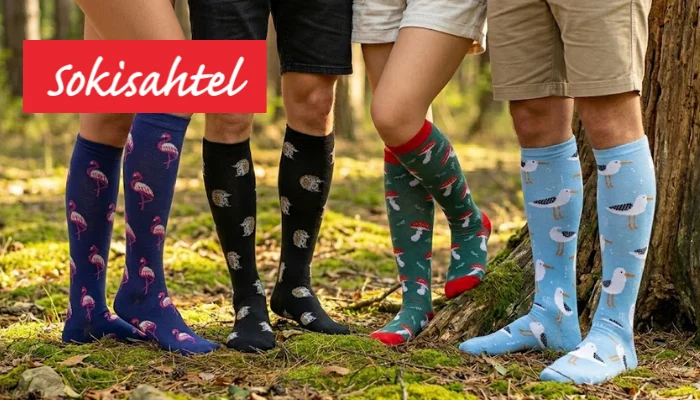
    Person wearing green compression knee-high socks with a red mushroom pattern while sitting outdoors in a forest setting.
    Mushroom-patterned compression knee-high socks

    Travelers. Long flights and bus rides are especially hard on the legs. Tight seating positions and dry cabin air increase the risk of swelling and deep vein thrombosis. Compression knee-high socks are an essential part of any frequent traveler’s gear.

    Pregnant women. During pregnancy, the volume of fluid in the body increases, and the growing uterus puts pressure on the pelvic veins. Legs become swollen, especially in the second and third trimesters. Compression knee-high socks are a comfortable alternative to maternity tights, especially in warmer weather.

    Athletes and active people. After exercise, compression knee-high socks help speed up recovery by reducing muscle fatigue and swelling.

    People with varicose veins. If you already have varicose veins, compression knee-high socks help keep the condition under control and prevent it from getting worse.

    When should you wear compression knee-high socks?

    Person wearing black compression knee-high socks with a hedgehog pattern while sitting outdoors in a green forest setting.
    Compression knee-high socks with hedgehogs

    The best time is in the morning, before your legs have a chance to swell. Put on compression knee-high socks right after waking up or before going to work. Wear them throughout the day and take them off in the evening.

    Some specific situations where compression knee-high socks are especially useful: long workdays spent on your feet, flights and long car journeys, daily wear during pregnancy, recovery after exercise, and warm summer days when your legs tend to swell more.

    One common mistake is wearing compression knee-high socks only once your legs already start to hurt. In reality, they work best as a preventive measure. Wear them before the problem appears.

    How to choose the right compression knee-high socks?

    When choosing compression knee-high socks, there are three important things to consider: the compression level, the size, and the material.

    Compression level. For everyday preventive wear, knee-high socks with light compression are the best choice. They provide enough support to keep your legs feeling good, but do not require a doctor’s recommendation. Medical knee-high socks with stronger compression (Class II and III) are intended for treating more serious conditions and should be chosen together with a doctor.

    Size. The right size is critically important when it comes to compression knee-high socks. A sock that is too large will not provide enough pressure, while one that is too small may dig in and do more harm than good. Measure the circumference of your ankle and the widest part of your calf to find the right size for you.

    Material. High-quality compression knee-high socks are made from polyamide and elastane, which ensure durability and the right level of compression. Some styles also include cotton for added comfort.

    Compression knee-high socks at Sokisahtel

    Our selection includes compression knee-high socks for every taste, both patterned and classic styles.

    Our COMPRESSION knee-high socks are the newest addition to the line, proving that something beneficial for your health doesn’t have to be boring. Designed with graduated compression, they help improve circulation and reduce leg fatigue — all while keeping the stylish look that is so typical of us.

    With seagull patterns, as well as hedgehog and mushroom designs. The COMPRESSION collection is available in both men’s and women’s sizes.

    Person wearing light blue compression knee-high socks with a seagull pattern while standing on a wooden pier by the sea.
    Compression knee-high socks with seagulls
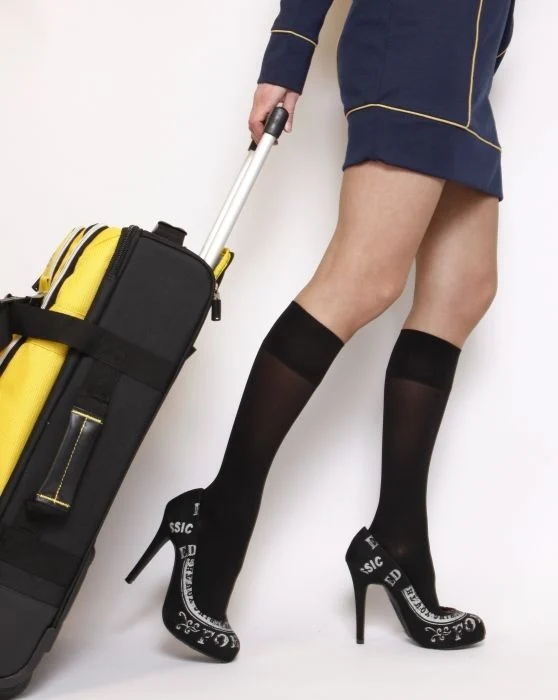
    Traveler wearing black compression-style stockings and high heels while pulling a rolling suitcase.

    VARIS support knee-high socks and stockings are classic products with a medical background, made with a strong knit and an anatomical fit. Available in 70 DEN and 140 DEN, in black and nude.

    Travel knee-high socks are designed mainly for longer journeys, but they are also suitable for everyday wear. ECOCARE 40 DEN travel knee-high socks are made from recycled nylon. RELAX 20 DEN Travel knee-high socks feature a sole with a gentle massage effect.

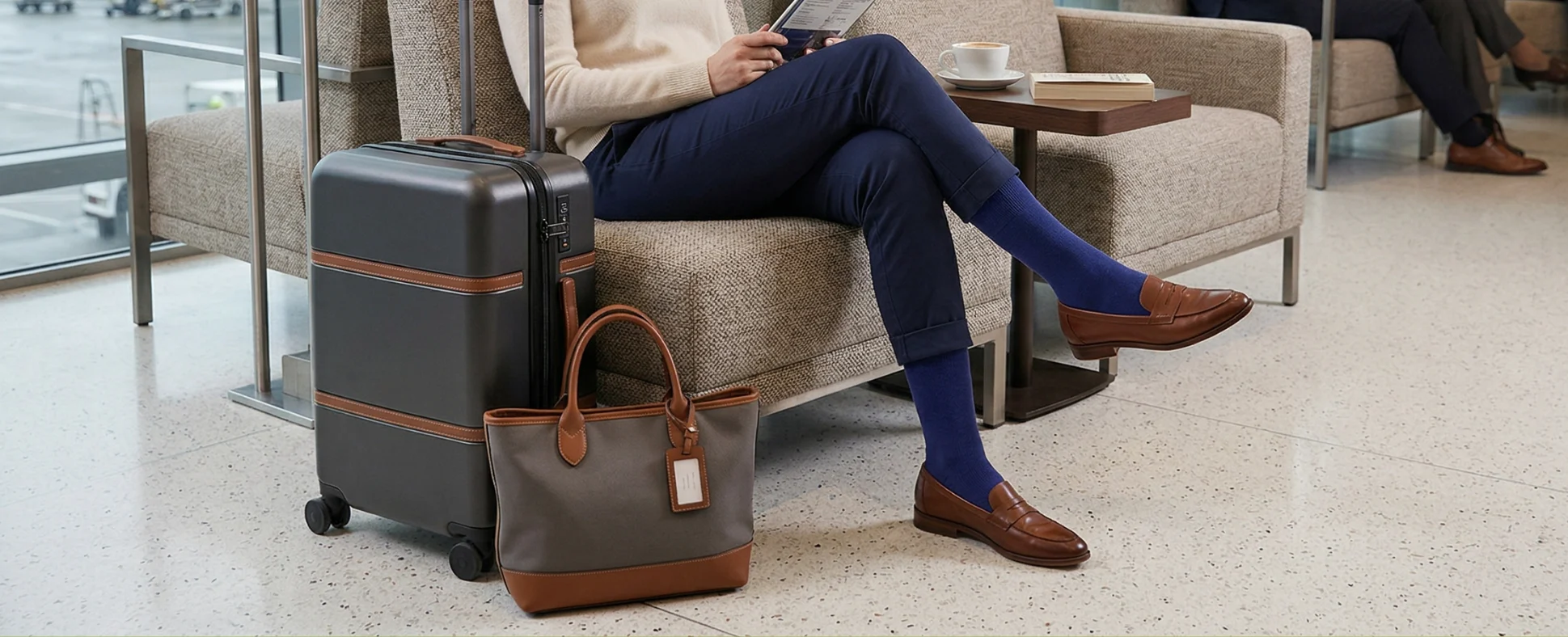
    Person wearing black compression knee-high socks and loafers while walking through an airport with a rolling suitcase.

    How to care for compression knee-high socks?

    Proper care extends the lifespan of compression knee-high socks and helps preserve their compression.

    Wash them by hand or in the washing machine at 30°C on a gentle cycle. Do not use fabric softener, as it damages the elastic fibers and causes the compression to weaken more quickly. Dry them flat, not in a dryer or on a radiator. Buy at least 2-3 pairs so you can alternate them and let them rest between washes. Replace your compression knee-high socks every 3-6 months, as the compression gradually weakens with wear and washing.

    Compression knee-high socks are a simple investment that does your legs good every day. Whether you stand at work, sit in an office, travel, or are pregnant, your legs deserve support. And as our COMPRESSION line shows, that support can look very stylish too!

    Keep Reading

    Curious about other types of compression socks and how they can help your legs?

  • Grip Socks Guide: Best Picks for Pilates, Yoga, and Barre (2026)

    Grip Socks Guide: Best Picks for Pilates, Yoga, and Barre (2026)

    There is a reason your feet slide during downward dog. Regular socks were never designed for the demands of a pilates reformer, a hot yoga class, or a barre session where every micro-movement matters. Grip socks solve this problem with a simple but effective design: textured rubber dots or patterns on the sole that keep your feet locked in place on any surface.

    Whether you call them grip socks, pilates socks, grippy socks, or studio socks, they all serve the same purpose. They give you traction, hygiene, and confidence on the mat or reformer. In this guide, we cover everything you need to know about choosing the right pair for your workout, your feet, and your style.

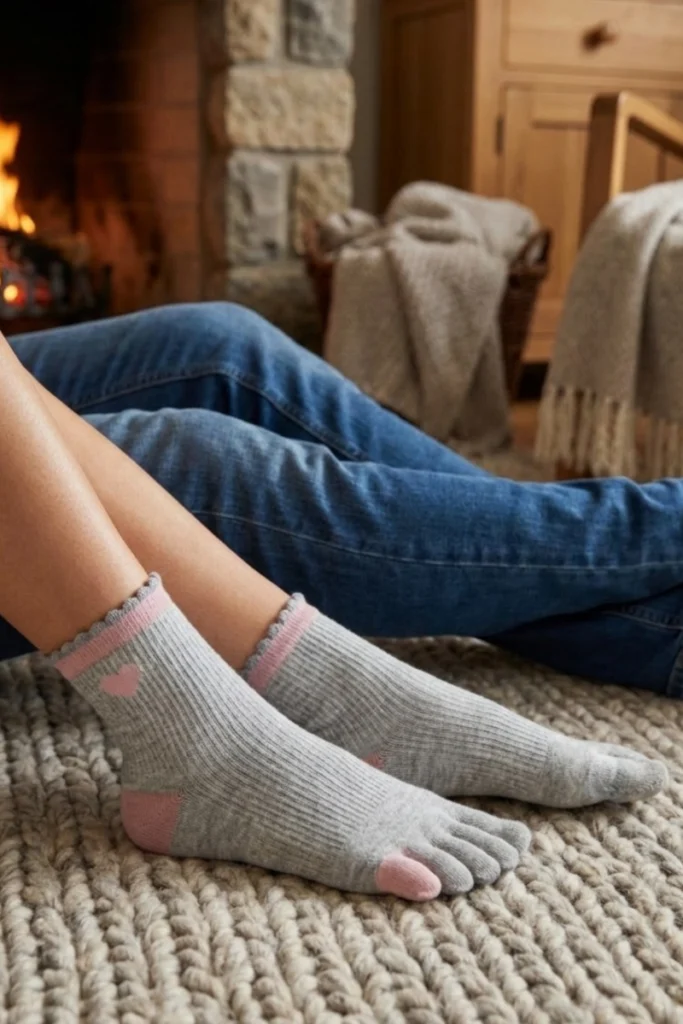
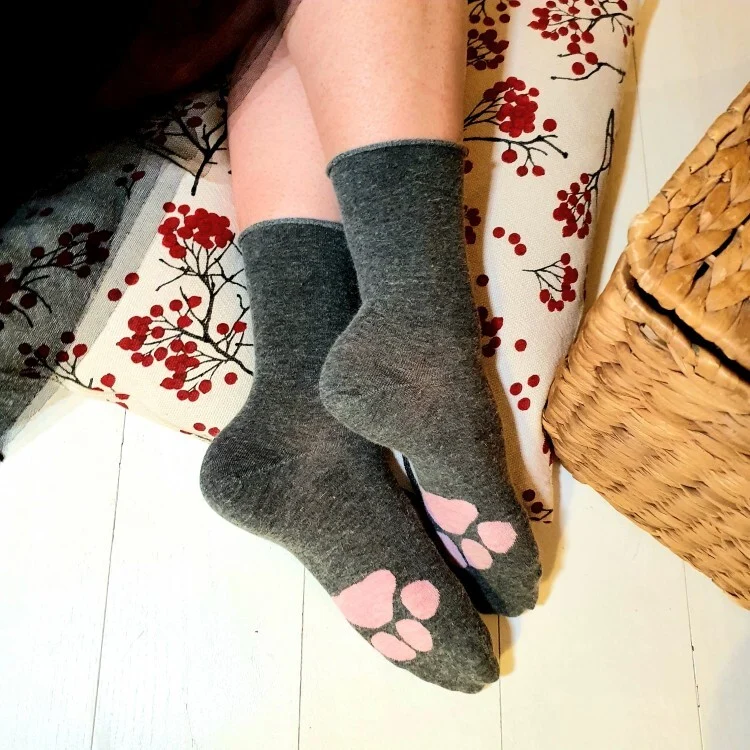
    Gray toe grip socks with pink accents worn indoors by a fireplace.

    What Are Grip Socks and How Do They Work?

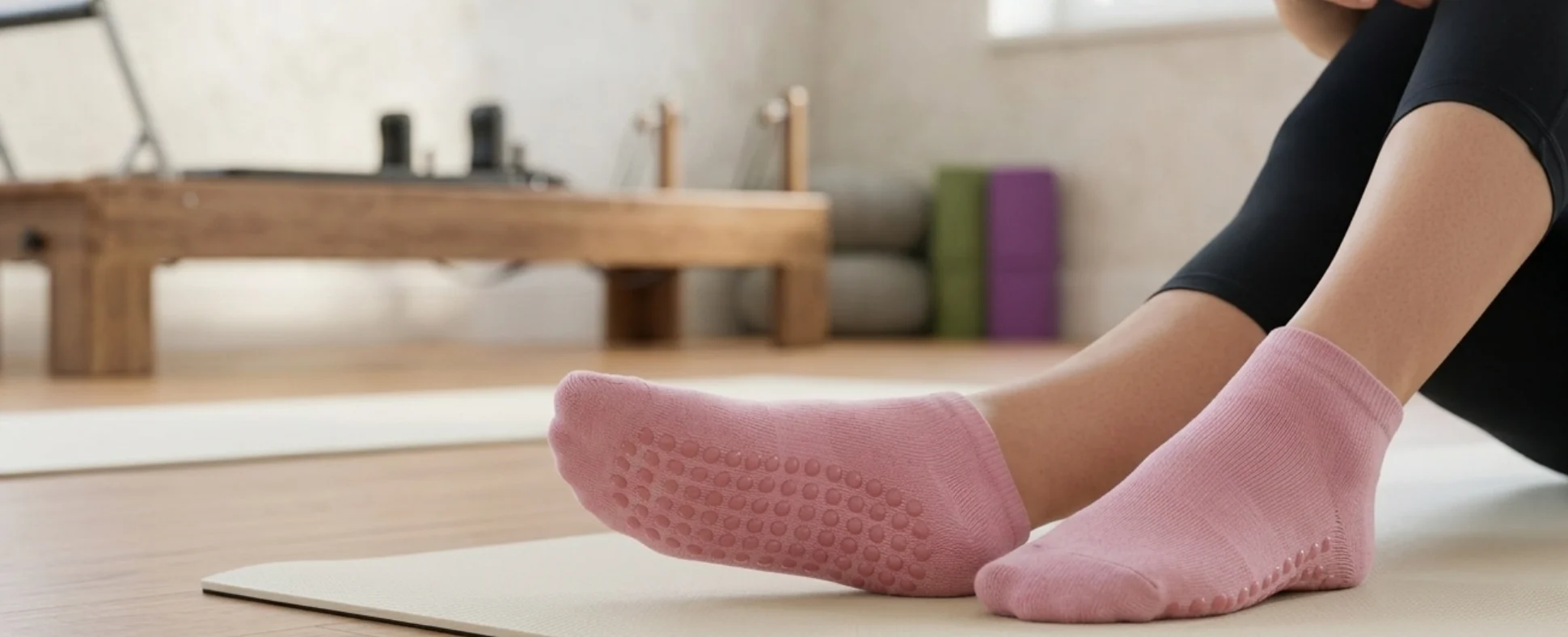
    Grip socks are specially designed socks with rubberized patterns on the sole. These patterns, usually made from silicone or PVC dots, create friction between your foot and the floor. The result is a stable, non-slip surface that stays in place whether you are holding a plank on a hardwood floor or pushing off on a pilates reformer.

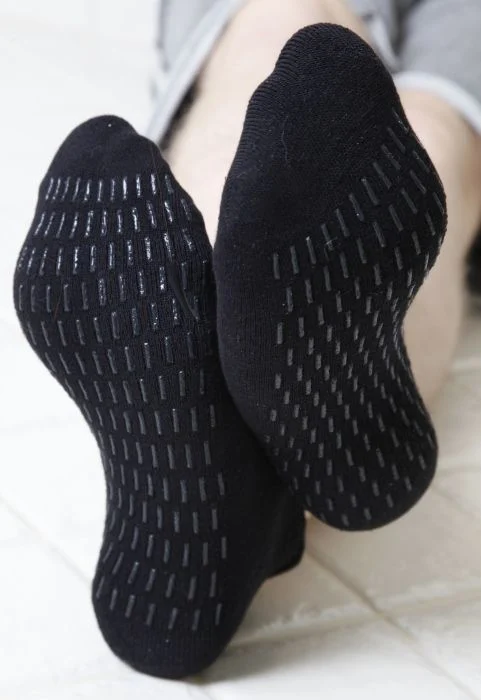
    The grip pattern varies by brand and intended use. Some socks feature full-sole coverage with hundreds of tiny dots, while others concentrate the grip on the ball of the foot and heel where traction matters most. Higher-end pilates grip socks often use raised silicone bars or wave patterns that offer superior hold on reformer platforms and studio floors.

    Beyond the grip itself, these socks typically use moisture-wicking materials like cotton blends, bamboo, or merino wool to keep your feet dry during intense sessions. Wet feet compromise grip, so breathability is just as important as the sole pattern.

    Why You Need Grip Socks for Pilates, Yoga, and Barre

    Walking into a pilates or barre studio barefoot might feel natural, but it comes with real drawbacks. Shared studio floors harbor bacteria and fungi that cause athlete’s foot and other infections. Grip socks act as a hygienic barrier between your feet and the floor while giving you better traction than bare skin on most surfaces.

    For pilates specifically, grip socks are almost essential on the reformer. The carriage surface becomes slippery with sweat, and a single foot slip during a leg press or lunge can throw off your entire form. Grippy socks keep your feet anchored so you can focus on engaging the right muscles instead of worrying about sliding.

    In yoga, grip socks help during standing balances and transitions. If you have ever lost your footing in warrior III or felt your feet creep forward in downward dog, you know how frustrating it is. The right pair of grip socks eliminates that distraction entirely.

    Barre classes involve small, precise movements where foot placement is everything. The combination of relevés, pulses, and stretches demands a sock that stays put. Many barre studios actually require grip socks for safety and hygiene reasons.

    Types of Grip Socks: Which Style Is Right for You?

    Not all grip socks are created equal. The style you choose depends on your activity, your preferences, and how much toe freedom you want.

    Full-Toe Grip Socks

    These look like regular socks but with grip on the bottom. They cover all five toes in a single compartment, making them the most familiar and comfortable option for beginners. Full-toe grip socks work well for barre, general studio classes, and anyone who prefers full coverage. They also keep feet warmer during slower-paced sessions like restorative yoga.

    Toeless (Open-Toe) Grip Socks

    Toeless grip socks cut off just before the toes, leaving them exposed. This style is popular in yoga and pilates because it allows your toes to spread naturally and grip the mat or reformer directly. Many yogis prefer the sensory feedback of bare toes while still getting sole traction. If you like the feel of barefoot practice but need the hygiene and grip benefits, toeless is your best option.

    Close-up of black grip socks with non-slip sole grips for Pilates, yoga, and barre.

    Five-Toe (Separated Toe) Grip Socks

    These have individual compartments for each toe, similar to toe socks but with grip soles. Five-toe grip socks offer the most natural foot position and the best individual toe control. They are excellent for pilates and yoga where toe splay and engagement matter. The trade-off is that they take a moment longer to put on, and some people find the toe separation uncomfortable at first.

    Low-Cut vs. Crew-Length Grip Socks

    Grip socks come in various heights. Low-cut and ankle styles are the most popular for studio workouts because they stay cool and look sleek. Crew-length grip socks offer more coverage and warmth, which is useful for early morning classes or studios with air conditioning. Some people also prefer crew-length for the extra ankle support and compression they provide.

    How to Choose the Best Pilates Grip Socks

    With so many options on the market, choosing the right pilates socks comes down to a few key factors.

    Grip pattern and coverage. For reformer pilates, look for socks with full-sole grip coverage. Partial-grip socks (dots only on the ball and heel) work fine for mat work and barre, but reformer movements demand grip across the entire sole. Check that the grip pattern is made from durable silicone rather than printed rubber, which wears off quickly.

    Material and breathability. Cotton-blend grip socks are affordable and comfortable, but they absorb sweat and can feel heavy during long sessions. Bamboo-blend socks offer better moisture wicking and natural antibacterial properties. For the best performance, look for a blend that includes a small percentage of nylon or spandex for stretch and shape retention.

    Fit and sizing. Grip socks should fit snugly without bunching. A loose grip sock defeats the purpose because the sock slides on your foot even if the sole grips the floor. Most brands offer standard small, medium, and large sizing based on shoe size. If you are between sizes, go smaller for a tighter fit.

    Arch support. Some premium grip socks include a built-in arch band that keeps the sock in place and provides light support. This is particularly useful during pilates and barre, where you spend a lot of time on the balls of your feet.

    Grip Socks for Different Activities

    Pilates (Mat and Reformer)

    Reformer pilates is where grip socks make the biggest difference. The smooth carriage surface becomes dangerously slippery with any moisture, and bare feet can stick uncomfortably to the platform. Choose socks with full-sole silicone grip and a snug fit. Toeless or five-toe styles are popular because they allow toe engagement during footwork exercises. For mat pilates, any grip sock style works well.

    Yoga

    Yoga grip socks are most useful for hot yoga, vinyasa, and any style where sweat makes the mat slippery. Toeless styles are the most popular for yoga because they allow natural toe spreading in poses like warrior and tree. If you practice on a mat with good texture, you may not need grip socks at all, but they are invaluable on studio floors and shared mats.

    Barre

    Barre grip socks need to be lightweight, low-profile, and secure. You are constantly transitioning between flat feet and relevé (on tiptoe), so the grip must hold in both positions. Many barre enthusiasts prefer full-toe grip socks for the clean look and full coverage. Studios often sell their own branded grip socks, but any quality pair with good sole coverage will work.

    Home Workouts and Everyday Wear

    Grip socks are not just for the studio. They are excellent for home workouts on hardwood or tile floors, for hospital stays where non-slip footwear is important, and for elderly family members who need extra traction around the house. If you have slippery stairs or polished floors at home, a pair of grippy socks can prevent falls and give you peace of mind.

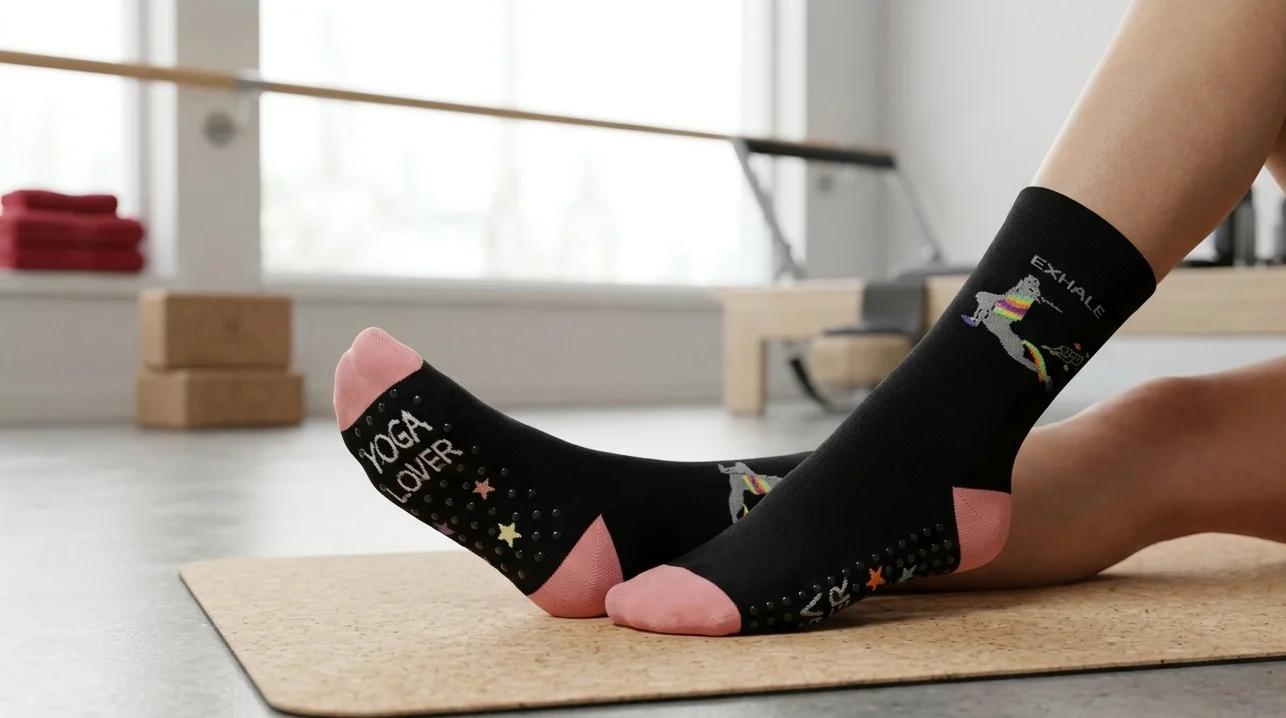
    Black grip socks with pink heel and toe accents on a yoga mat in a Pilates studio.

    How to Care for Your Grip Socks

    Grip socks last longer when you treat them right. Turn them inside out before washing to protect the silicone grips. Use cold water and a gentle cycle, and avoid fabric softener, which leaves a residue that reduces grip effectiveness. Air drying is best because high dryer heat can warp or melt the silicone dots. If you must use a dryer, keep it on low heat.

    Replace your grip socks when the silicone pattern starts to wear smooth, which usually happens after 50 to 100 wears depending on how intense your sessions are and the quality of the socks. You will notice the difference immediately: if your feet start sliding again, it is time for a new pair.

    Grip Socks vs. Bare Feet vs. Regular Socks

    Each option has its place, and the right choice depends on your activity and environment.

    Bare feet offer the most natural feel and direct sensory connection with the floor. For yoga on your own mat at home, bare feet are perfectly fine. But in a shared studio, bare feet mean direct contact with whatever the previous class left behind.

    Regular socks are the worst option for studio workouts. Cotton and synthetic socks have zero traction on smooth floors and reformer platforms. Wearing regular socks to pilates or barre is a recipe for slipping and potential injury.

    Grip socks strike the ideal balance. They provide hygiene protection, reliable traction, and warmth without sacrificing the close-to-barefoot feel that studio workouts demand. For reformer pilates and barre, they are practically non-negotiable.

    What to Look for When Buying Grip Socks

    Before you buy your next pair, keep these practical tips in mind.

    Check the grip material. Silicone grips last longer and perform better than printed PVC dots. You can tell the difference by touch: silicone feels rubbery and slightly tacky, while printed grips feel flat and smooth.

    Consider buying multiple pairs. If you work out several times a week, rotating between two or three pairs extends the life of each one and ensures you always have a clean pair ready.

    Try them on before class if possible. Grip socks that are too tight will compress your toes and distract you during practice. Socks that are too loose will bunch under the ball of your foot and reduce contact with the grip surface.

    Think about the activities you do most. If you split your time between pilates and yoga, toeless grip socks are the most versatile choice. If you mostly do barre and want a polished look, full-toe low-cut styles in neutral colors are a safe bet.

    Ready to find your perfect pair? Browse the sock collection at Sokisahtel for grip socks, pilates socks, and studio-ready styles that combine function with personality.

  • Compression Socks Benefits: Who Needs Them and Why They Work

    Compression Socks Benefits: Who Needs Them and Why They Work

    A decade ago, if someone mentioned compression socks, you’d picture a hospital recovery room or your grandmother’s bathroom cabinet. They were a medical product, functional, clinical, and about as fashionable as a blood pressure cuff. Today, the same technology is worn by marathon runners crossing finish lines, startup founders sitting through transatlantic flights, nurses powering through 12-hour shifts, and pregnant women navigating their third trimester. What changed? Not the science, compression has always worked. What changed is that people outside the medical world finally discovered it works for them too.

    At Sokisahtel, our compression collection has grown from a niche medical section to one of our most-requested categories. The customers buying them aren’t sick, they’re travelers who refuse to land with swollen ankles, office workers who discovered their legs feel dramatically better at the end of the day, and athletes who swear by faster recovery. This guide explains what compression socks actually do, who benefits most, and how to choose the right pair, because the wrong compression level or size can do more harm than good.

    What Compression Socks Actually Are (and Aren’t)

    Compression socks are specially engineered hosiery that apply graduated pressure to your lower legs. “Graduated” is the key word: the sock is tightest at the ankle and gradually decreases in pressure as it moves up toward the knee. This isn’t arbitrary, it’s based on how your circulatory system works. Blood in your legs has to fight gravity to return to your heart, and the graduated pressure creates a gentle upward squeeze that assists this process, essentially helping your veins do their job more efficiently.

    What compression socks are not: they’re not just “tight socks.” Regular knee-highs with strong elastic apply uniform pressure that can actually restrict circulation at the top. Genuine compression socks are constructed with specific pressure gradients, tighter at the bottom, looser at the top, that actively improve blood flow. The pressure is measured in millimeters of mercury (mmHg), the same unit used for blood pressure, and different pressure levels serve different purposes.

    Traveler wearing black knee-high compression socks while pulling a suitcase, showing compression socks benefits for long flights.

    How Compression Works: The Science in Simple Terms

    Your veins have tiny one-way valves that prevent blood from flowing backward. When you stand or sit for extended periods, gravity pushes blood downward against these valves, causing it to pool in your lower legs. Over time, this pooling leads to swollen ankles, heavy-feeling legs, visible veins, and a general achiness that many people dismiss as “just being tired.” In more serious cases, prolonged blood pooling can contribute to deep vein thrombosis (DVT), blood clots in the deep veins that can be life-threatening if they travel to the lungs.

    Compression socks counteract this by gently squeezing the diameter of your veins. When veins are slightly narrower, blood flows faster, think of putting your thumb over the end of a garden hose. The graduated design (tightest at the ankle, loosening upward) creates a pumping effect that pushes blood back toward the heart, assisting your body’s natural circulation. The result is less pooling, less swelling, faster waste-product removal from muscles, and legs that feel measurably lighter and less fatigued at the end of the day.

    Infographic showing compression socks benefits with graduated pressure that supports circulation, reduces swelling, and eases leg fatigue.

    The Proven Benefits (What the Research Actually Shows)

    Compression socks aren’t a miracle cure, and not every claim about them holds up to scrutiny. Here are the benefits supported by solid evidence, the ones we feel comfortable recommending to our customers at Sokisahtel.

    Reduced Leg Swelling

    This is the most well-documented benefit, backed by decades of clinical research. By improving venous return, compression socks measurably reduce the fluid buildup that causes puffy ankles and swollen calves. Multiple studies have demonstrated significant reductions in leg volume after even a single day of wearing compression. If you’ve ever taken off your socks at the end of a long day and noticed indentations in your skin where the elastic was, or looked down in the evening to see ankles that look puffier than they did in the morning, compression socks directly address this issue.

    DVT Prevention During Travel and Immobility

    Deep vein thrombosis is a serious condition where blood clots form in the deep veins of the legs, and prolonged immobility (long flights, extended car journeys, bed rest after surgery) significantly increases the risk. Compression socks are one of the most effective non-pharmaceutical tools for preventing DVT in these situations. Major medical organizations worldwide recommend compression stockings for at-risk individuals during travel and post-surgical recovery. This is arguably the most important medical use of compression, and it’s why we always recommend travelers on flights longer than 4 hours consider wearing them.

    Faster Post-Exercise Recovery

    This is where the evidence is promising but more nuanced. Research shows that wearing compression socks after intense exercise (not necessarily during) can reduce markers of muscle damage, decrease perceived muscle soreness, and potentially speed the clearance of metabolic waste products from muscles. Marathon runners and endurance athletes have embraced post-race compression for this reason. Whether compression improves actual performance during exercise is less clear, most studies show modest or no performance benefits, but recovery benefits are supported by a meaningful body of evidence.

    Reduced Leg Fatigue for Standing Workers

    Nurses, retail workers, teachers, chefs, hairstylists, factory workers, anyone whose job keeps them standing for 8+ hours knows the sensation of heavy, aching legs at the end of a shift. Studies on healthcare workers specifically show significant reductions in leg fatigue and discomfort when wearing compression during long shifts. Many of our Sokisahtel customers who work in healthcare or retail tell us that compression socks are the single biggest quality-of-life improvement they’ve made for their working day, and that once they started wearing them, they couldn’t go back to regular socks.

    Support During Pregnancy

    Pregnancy increases blood volume by 30-50% and adds significant pressure on the veins in the legs and pelvis. The result, for many women, is swollen ankles, leg heaviness, visible varicose veins, and general lower-extremity discomfort, particularly in the second and third trimesters. Compression socks help manage these symptoms by supporting circulation throughout pregnancy. Many obstetricians recommend them starting in the second trimester, and our customers who’ve used them during pregnancy consistently report meaningful improvements in leg comfort and reduced swelling. At Sokisahtel, we carry maternity-specific compression options in our compression collection.

    Compression Levels: How to Choose the Right Pressure

    This is where many people go wrong, either choosing compression that’s too light to make a difference or too strong for their needs. Here’s a straightforward breakdown:

    Level Pressure Best For Prescription?
    Mild 8,15 mmHg Daily comfort, tired legs, light travel, first-time users No
    Moderate 15,20 mmHg Long flights, standing jobs, minor varicose veins, sports recovery No
    Firm 20,30 mmHg Moderate swelling, varicose veins, DVT prevention, post-surgery Recommended
    Extra Firm 30,40 mmHg Severe swelling, chronic venous insufficiency, lymphedema Yes

    For most non-medical users, travelers, office workers, casual athletes, people who are simply curious, we recommend starting with moderate compression (15-20 mmHg). This level provides enough pressure to make a noticeable difference in leg comfort and swelling, while being comfortable enough to wear all day without any getting-used-to period. It’s the sweet spot that covers most everyday situations.

    For specific medical conditions (established varicose veins, post-surgical recovery, diagnosed venous insufficiency), firm or extra firm compression may be appropriate, but these levels should be chosen with guidance from a healthcare provider, ideally with proper leg measurements. Higher compression that doesn’t fit correctly can restrict circulation rather than improve it, and that’s the opposite of what you want.

    Who Should Wear Compression Socks?

    Frequent travelers. If you fly more than 4 hours at a time, compression socks should be in your carry-on. The combination of pressurized cabin air, limited movement, and dehydration makes long flights a significant risk factor for DVT and swelling. Even on shorter flights, compression prevents the puffy ankles and leg stiffness that make the first few hours after landing uncomfortable.

    Standing workers. Healthcare professionals, teachers, retail staff, hospitality workers, chefs, if your job keeps you upright for 8+ hours, compression socks can transform how your legs feel at the end of a shift. The improvement is often dramatic enough that once people try compression for work, they refuse to go back.
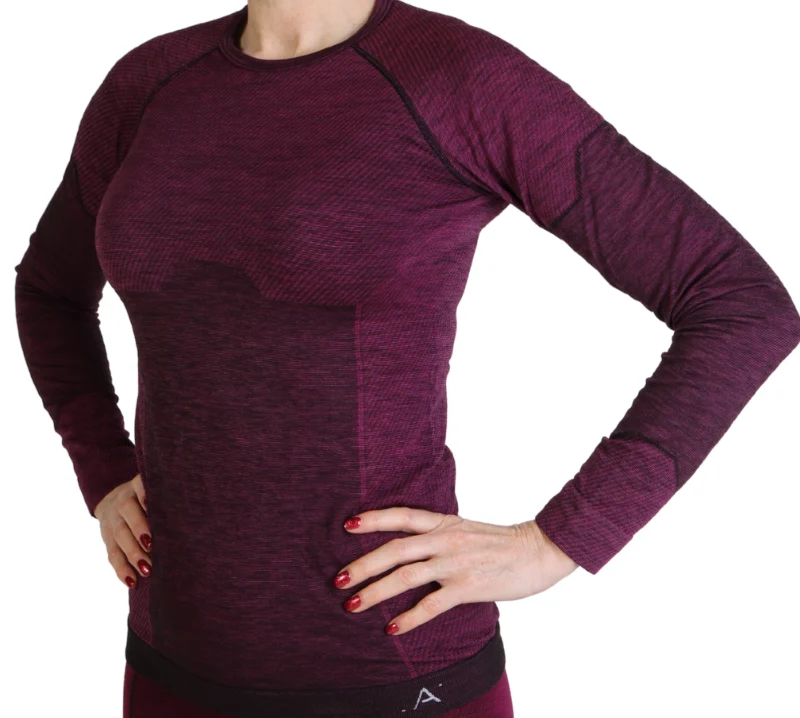
    Desk workers. Sitting all day isn’t much better for your leg circulation than standing all day. Prolonged sitting impairs venous return, leading to swollen ankles and heavy legs by late afternoon. Mild to moderate compression during the workday addresses this quietly and comfortably.

    Athletes and active people. For recovery after hard training sessions, not necessarily during them. Wearing compression socks for 2-4 hours after intense exercise may reduce soreness and speed recovery. Marathon runners and endurance athletes are the most enthusiastic users.

    Pregnant women. Especially from the second trimester onward, when blood volume increases and leg swelling becomes common. Check with your obstetrician about the right compression level.

    How to Wear Compression Socks the Right Way

    Put them on first thing in the morning. Your legs are at their least swollen when you wake up. Applying compression before your legs start swelling gives you maximum benefit throughout the day. Trying to wrestle on compression socks over already-swollen legs is harder, less comfortable, and less effective.

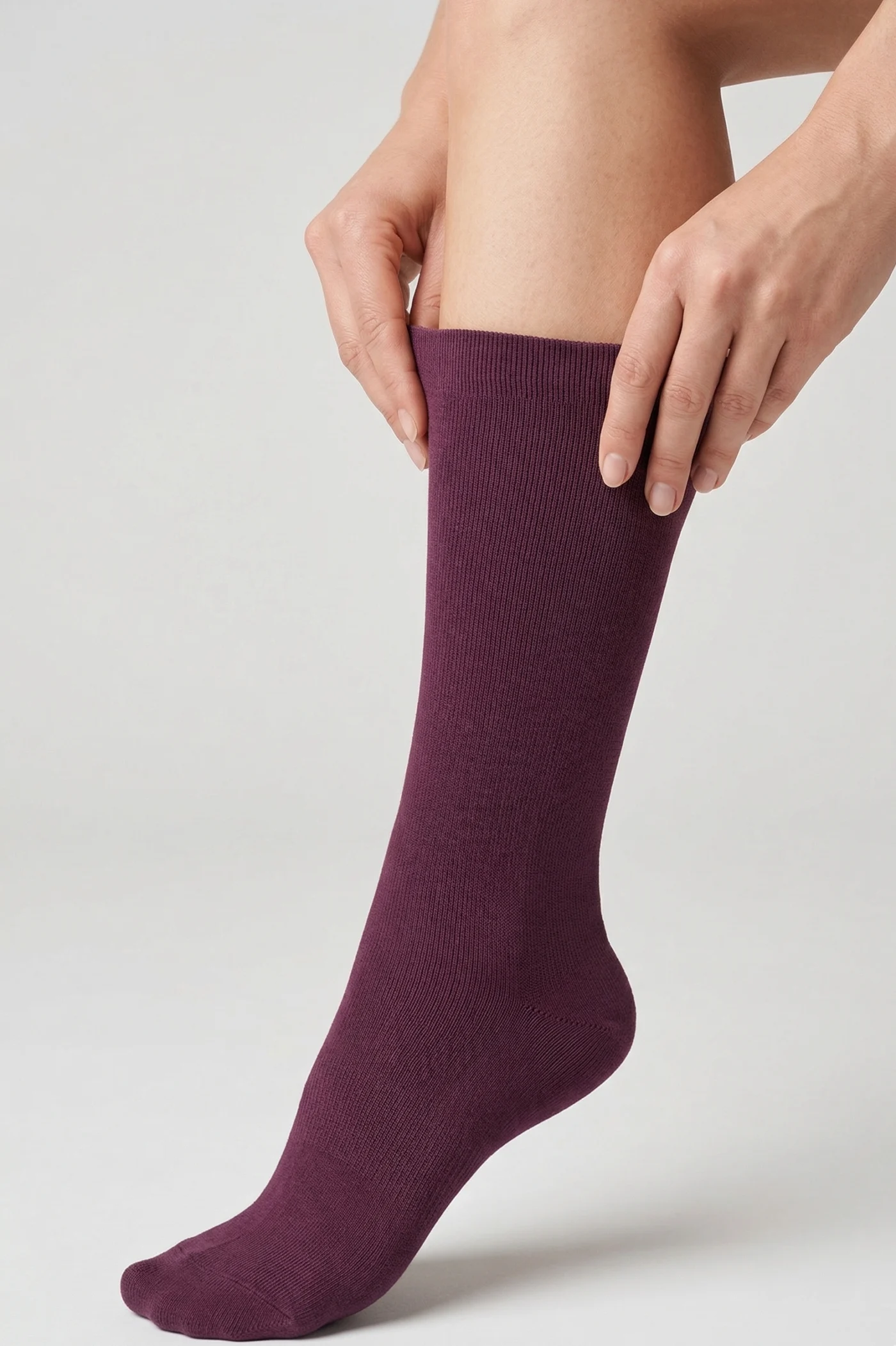
    The technique matters. Don’t bunch them at the ankle and yank upward, this creates uneven pressure and is a recipe for frustration. Instead, turn the sock inside out down to the toe, slide your foot in, then gradually roll the sock up your leg, smoothing out any wrinkles as you go. Wrinkles and folds create pressure points that are uncomfortable and counterproductive. It takes a few tries to get the technique down, but once you have it, the process takes about 30 seconds per sock.
    Person putting on a purple compression sock, illustrating compression socks benefits for swelling relief and leg comfort.

    Remove them at night. Unless your doctor specifically says otherwise, take compression socks off when you go to bed. Your legs are elevated during sleep, so gravity is already helping with circulation. Wearing compression while lying flat is unnecessary and can potentially be counterproductive.

    Replace them regularly. Compression socks lose their elasticity over time, just like any elastic garment. With daily wear, most brands recommend replacement every 3-6 months. When the compression starts feeling noticeably weaker or the elastic doesn’t grip as firmly, it’s time for a new pair.

    Get the right size. This cannot be overstated. Compression only works if the sock fits correctly. Too loose and there’s not enough pressure to make a difference; too tight and you risk restricting circulation. Most brands provide sizing charts based on calf circumference and shoe size. Measure your calf at its widest point with a flexible tape measure and consult the chart, don’t guess. Our team at Sokisahtel can help with sizing if you’re unsure; reach out at info@sokisahtel.net.

    Modern Compression Socks: They Don’t Look Medical Anymore

    One of the biggest barriers to compression adoption has always been aesthetics. Nobody wants to wear socks that scream “medical device.” The good news: that era is over. Modern compression socks come in every color, pattern, and style imaginable, from solid black dress socks that look identical to regular business socks, to bold patterns, fun prints, and sporty designs. At Sokisahtel, our compression range includes options that look like perfectly normal, attractive socks, because we believe the decision to wear compression should be about how your legs feel, not about sacrificing how you look.
    Frequently Asked Questions

    Can you wear compression socks every day?

    Yes. Mild to moderate compression socks (8-20 mmHg) are safe for daily wear for most healthy people. Many healthcare workers, frequent travelers, and desk workers wear them every working day. If you have circulatory conditions or arterial disease, check with your doctor about the appropriate compression level and duration for daily use.
    Do compression socks help with running performance?

    The research is mixed on during-exercise performance, some studies show small improvements, others show none. The evidence for post-exercise recovery is stronger: wearing compression after running appears to reduce muscle soreness and may speed recovery. Most experts recommend them primarily as a recovery tool rather than a performance enhancer. Wearing them during long runs likely doesn’t hurt and may help, but the biggest benefit comes from wearing them for a few hours after you finish.

    Are compression socks uncomfortable?

    Properly fitted compression socks should feel snug, noticeably tighter than regular socks, but not painful, pinching, or restricting. The first day or two might feel unusual if you’ve never worn compression before, but most people adjust quickly and many report that their legs feel so much better that they actually prefer the snug feeling. If your compression socks cause numbness, tingling, or pain, they’re either the wrong size or the wrong compression level. Start with moderate (15-20 mmHg) if you’re new to compression and work up from there if needed.

    How long should you wear compression socks on a flight?

    Put them on before boarding and keep them on for the entire flight plus about one to two hours after landing. This covers the full period of immobility plus the time it takes your circulation to normalize after sitting still for hours. For long-haul flights (8+ hours), this is especially important. Even for shorter flights (3-4 hours), compression helps prevent the ankle swelling and leg stiffness that many travelers experience.

    Who should NOT wear compression socks?

    People with peripheral arterial disease (PAD), severe peripheral neuropathy, active skin infections on the legs, or certain dermatological conditions affecting the lower legs should avoid compression socks unless specifically directed by a doctor. The reason is straightforward: compression works by narrowing veins to speed blood flow, but if the underlying problem is insufficient arterial blood supply (as in PAD), adding compression can make things worse. When in doubt, a quick conversation with your doctor is all it takes to confirm whether compression is safe for you.

    Find Your Compression Socks at Sokisahtel

    Our compression collection includes graduated compression stockings, tights, and knee-highs in various pressure levels and styles, from clinical-grade medical compression to everyday options that look like regular socks. We also carry compression tights for complete lower-body support, which many of our customers prefer during pregnancy or for all-day standing jobs.

    Need help choosing the right compression level or size? Our customer service team deals with compression questions every day. Reach out at info@sokisahtel.net or call +372 5551 0994 (Monday-Friday, 9-5) and we’ll help you find the right fit. Free shipping across Europe on orders over €40.

    → Browse our compression collection

    Keep Reading

    Interested in learning more about how the right socks can improve your daily comfort? Try these:

  • Best Socks for Sweaty Feet: Materials, Features, and Expert Tips

    Best Socks for Sweaty Feet: Materials, Features, and Expert Tips

    Nobody talks about sweaty feet at dinner parties, but behind closed doors, it’s one of the most common complaints people bring to us at Sokisahtel. The conversation usually follows the same pattern: a slightly embarrassed customer mentions that their feet are “always damp,” that their shoes “develop a smell,” or that they “go through socks faster than seems normal.” Then they ask, almost apologetically, whether there’s a sock that can actually help. The answer is a definitive yes, and the solution is simpler than most people expect. In most cases, swapping to the right sock material transforms the situation within days.

    Your feet have roughly 250,000 sweat glands, more per square centimeter than almost any other part of your body. On an average day, even a foot that feels “normal” produces about half a pint of moisture. For people with hyperhidrosis (the medical term for excessive sweating), that number can be significantly higher. The point is: everyone’s feet sweat. The difference between feet that feel comfortable and feet that feel like they’re swimming in their shoes comes down almost entirely to what material is managing that moisture. This guide covers the materials, features, and practical tips that make the biggest difference.

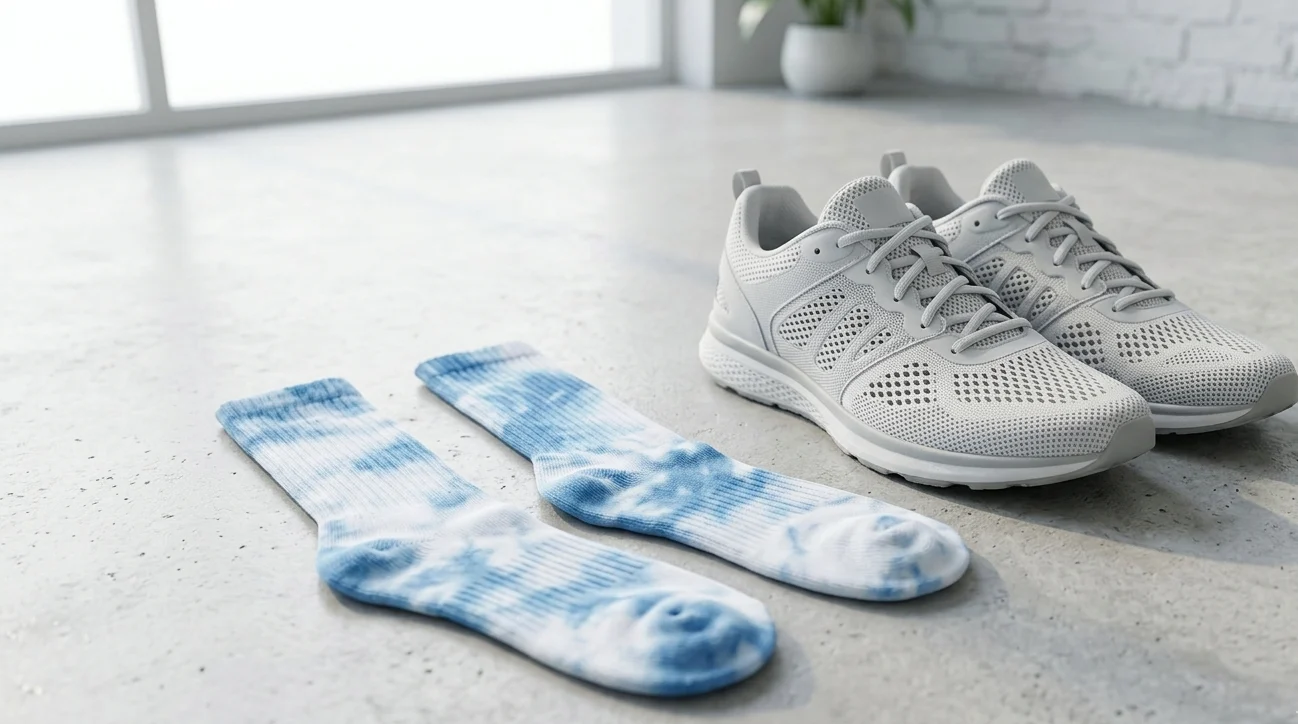
    Socks for sweaty feet laid out beside breathable gray sneakers on a clean floor.

    Why Your Current Socks Are Making It Worse

    If your sock drawer is full of cotton, you’ve found the main culprit. Cotton is the most popular sock material in the world, and it’s also the worst possible choice for sweaty feet. Here’s why: cotton absorbs moisture eagerly, it soaks up your foot sweat like a sponge, but then it holds onto that moisture and presses it against your skin for hours. A wet cotton sock stays wet. It creates a constantly damp environment next to your skin, which does three terrible things simultaneously: it increases friction (leading to blisters), it feeds the bacteria that produce foot odor, and it makes your feet feel cold and clammy in cooler weather.

    The irony is that cotton socks feel soft and comfortable when you first put them on, which is why people keep buying them. But by mid-afternoon, the damage is done, your feet are damp, your shoes are absorbing moisture they’ll struggle to release, and bacteria are having their best day. If you’re reading this article because your feet sweat more than you’d like, the single most impactful change you can make, more than any powder, spray, or shoe insert, is replacing your cotton socks with the right material.

    The Best Sock Materials for Sweaty Feet

    Merino Wool, Our Top Recommendation

    It sounds counterintuitive, wool for sweaty feet?, but merino wool is genuinely the best all-around material for moisture management. Merino fibers can absorb up to 30% of their weight in moisture before feeling even slightly damp, and instead of holding that moisture against your skin (like cotton), the fiber structure actively transports it away from the skin surface to the outer layer of the sock where it evaporates. Your skin stays dry, friction drops to almost nothing, and blisters simply don’t get the damp conditions they need to form.

    But the real magic of merino for sweaty feet is its odor resistance. The lanolin naturally present in wool fibers has genuine antibacterial properties that prevent the growth of odor-causing bacteria. You can wear merino socks for two or three days with no detectable smell, a claim that would be absurd for cotton. For people whose foot odor is as much of a concern as the dampness, merino addresses both problems at once. We’ve had customers at Sokisahtel switch from cotton to merino wool socks and come back genuinely amazed at the difference, not just in how their feet feel, but in how their shoes no longer develop that persistent smell.

    And no, merino is not “too warm for summer.” Lightweight merino socks regulate temperature in both directions, they keep you warm in winter and cool in summer. The same fiber properties that wick moisture also allow excess heat to escape. Thin merino socks in summer can actually keep your feet cooler than cotton.

    Bamboo Viscose, The Silky-Cool Option

    Bamboo viscose is an outstanding choice for people who want moisture management without wool, whether because of price, personal preference, or skin sensitivity. Bamboo fibers are naturally moisture-wicking, breathable, and have their own antibacterial properties (though slightly less potent than merino’s lanolin). The texture is distinctive, smoother and silkier than cotton, with a light, cool feel that many people describe as “like wearing nothing.” This makes bamboo especially good for warm weather, when you want maximum breathability and minimum heat.

    Bamboo socks also hold their shape well through washing and are generally more affordable than merino, making them a practical everyday choice. At Sokisahtel, our bamboo viscose collection has become one of our most popular categories precisely because customers with sweaty feet discover them and then buy every color we carry. The environmental angle is a bonus: bamboo is a rapidly renewable crop that grows without pesticides and requires significantly less water than cotton.

    Synthetic Performance Blends

    High-performance synthetic fabrics like CoolMax, Dri-FIT, and similar engineered polyester blends were literally designed for moisture management. They wick sweat away from the skin and dry faster than any natural fiber, which makes them excellent for intense physical activity where sweat production is at its peak. If you’re running, doing HIIT workouts, or playing competitive sports, synthetic performance socks handle the extreme end of moisture better than anything else.

    The trade-off is odor. Synthetics don’t have the natural antibacterial properties of merino or bamboo, so they tend to develop smell faster. Many modern athletic socks now incorporate silver ions, copper fibers, or other antimicrobial treatments to address this, and these treatments genuinely help, but they don’t match the natural odor resistance of wool. For sports and gym use, synthetics are hard to beat. For everyday wear where you’ll have the socks on for 8-12 hours, merino or bamboo usually wins. Our athletic sock selection includes quality synthetic options with antimicrobial features.

    Comparison of socks for sweaty feet showing different sock styles and fabric textures.

    Features That Actually Matter for Sweaty Feet

    Beyond material, certain design features make a tangible difference. Here’s what to look for when shopping, and what’s just marketing noise.

    Mesh ventilation panels are the most immediately useful feature. These thin, open-weave zones, typically on the top of the foot and around the ankle, increase airflow dramatically. You can usually see them in the sock as slightly thinner, more see-through areas. They work. If a sock has mesh panels, it will breathe better than the same sock without them, full stop.

    Seamless toe construction matters more for sweaty feet than for dry feet. When your skin is damp, any rough seam becomes a friction point. A thick, ridged toe seam that you barely notice on a dry foot will rub relentlessly on a sweaty one, creating blisters and irritation. Flat or seamless toe closures eliminate this problem entirely.

    Arch support bands (elastic bands across the arch) serve double duty: they keep the sock in place and provide light compression. A sock that bunches and shifts creates pockets where moisture pools; a sock that stays anchored to your foot keeps moisture management working properly. Look for socks that feel snug across the arch without being tight.

    Antimicrobial treatments (silver ions, copper fibers) help with odor in synthetic socks. They’re not necessary in merino or bamboo (which have natural antibacterial properties) but they’re genuinely useful in polyester and nylon socks for people concerned about smell.

    Best Socks for Sweaty Feet by Situation

    For the office: Merino wool or bamboo viscose in mid-calf length. Both materials handle all-day moisture while looking professional with dress shoes. Bamboo has a slight edge in warm offices; merino is unbeatable in cold weather. Our men’s dress sock selection and women’s range include options in both materials.

    For running and intense exercise: Synthetic moisture-wicking socks with mesh panels and arch support. Ankle or quarter length for running; crew for gym training. Prioritize quick-drying speed over odor resistance, you’ll be washing these after every use anyway.

    For everyday casual wear: A merino-synthetic blend (60-70% merino, 30-40% nylon/elastane) gives you the best of both worlds. The merino handles moisture and odor; the synthetic adds durability and stretch. These blends are comfortable for all-day wear and hold up through hundreds of wash cycles.

    For hot weather: Lightweight bamboo or thin merino in no-show or ankle length. Avoid thick, cushioned socks, they add insulation your feet don’t need. Maximum breathability with minimum fabric is the goal. Our footies collection includes thin, moisture-managing options perfect for summer.

    Beyond Socks: Habits That Help

    The right socks make the biggest single difference, but combining them with a few simple habits multiplies the effect.

    Rotate your shoes. Never wear the same pair two days in a row. Shoes need at least 24 hours to dry completely after a day of absorbing foot moisture. Alternating between two or three pairs gives each pair time to dry out fully, which dramatically reduces odor buildup and extends shoe life. This single habit makes a bigger difference than most people expect.

    Carry a spare pair. If your feet sweat heavily, changing socks midday is a genuine game-changer. A fresh pair of dry socks at lunchtime resets the clock on moisture and bacteria, keeping your feet comfortable through the afternoon. Keep a spare pair in your desk drawer, gym bag, or work locker.

    Use foot powder or antiperspirant. A light dusting of foot powder (talcum or cornstarch-based) before putting on socks creates an additional moisture-absorbing layer. For more serious sweating, foot-specific antiperspirants applied at night can measurably reduce sweat production. These products work best as a complement to good socks, not as a replacement.

    Choose breathable shoes. Even the best socks can’t fully compensate for non-breathable footwear. Leather, canvas, and mesh shoes allow airflow. Plastic, rubber, and synthetic patent shoes trap heat and moisture. When possible, pair your moisture-wicking socks with shoes that let air circulate.

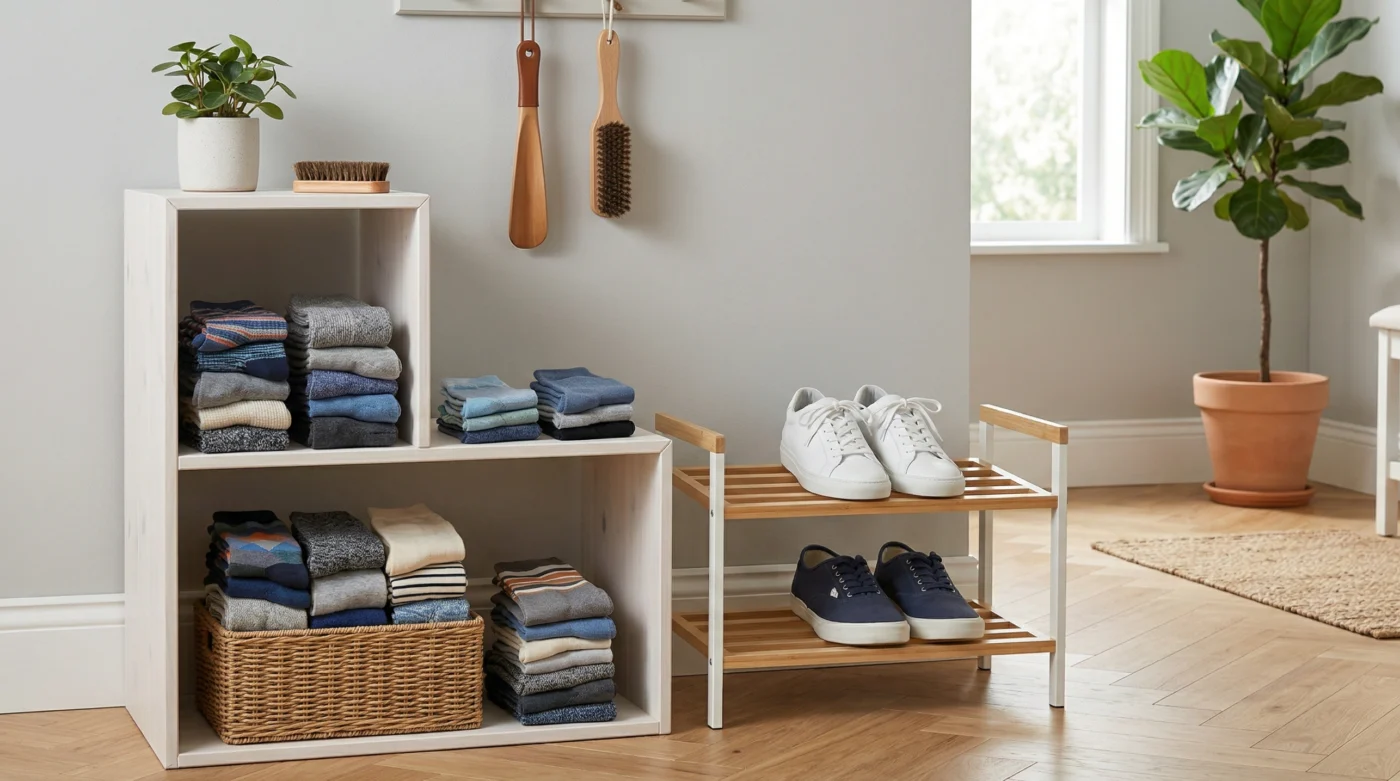
    Socks for sweaty feet neatly organized on shelves beside clean sneakers in a bright room.

    Frequently Asked Questions

    Are thicker socks better for sweaty feet?

    Not necessarily, and often the opposite is true. Thick socks absorb more moisture initially, but they also retain more heat and take longer to dry, which can actually make the dampness problem worse. For most people with sweaty feet, medium-weight socks in moisture-wicking materials hit the best balance, enough substance to absorb and transport moisture, thin enough to allow ventilation. In hot weather, thinner socks in bamboo or lightweight merino are almost always better.

    How often should I wash socks if my feet sweat a lot?

    After every single wear, no exceptions. Rewearing socks when you have sweaty feet is the fastest way to develop persistent odor, bacteria multiply rapidly in used, damp socks. Wash in warm (not hot) water and skip the fabric softener, which coats fibers and reduces their moisture-wicking ability. Air drying preserves the sock’s technical performance better than machine drying.

    Can socks alone fix excessive foot sweating?

    Better socks make a dramatic difference in comfort and odor, but they manage moisture rather than reducing it. If you’re experiencing excessive sweating that persists despite good socks, breathable shoes, regular shoe rotation, and basic foot hygiene, you may have hyperhidrosis, a medical condition that affects about 3% of the population. Consult a dermatologist; there are effective treatments ranging from prescription antiperspirants to more advanced options that can significantly reduce foot sweating at its source.

    Do bamboo socks really help with sweaty feet?

    Yes, and the evidence goes beyond marketing claims. Bamboo viscose fibers absorb moisture faster than cotton and release it more efficiently through evaporation. Independent testing shows bamboo outperforms cotton on both moisture absorption speed and breathability. Combined with natural antibacterial properties, bamboo socks genuinely keep feet drier and fresher than cotton alternatives. They’re not quite as effective as merino wool for moisture management, but they cost less and many people prefer the silky texture.

    What’s the single best sock material for foot odor?

    Merino wool, by a clear margin. The natural lanolin in wool fibers actively inhibits bacterial growth, the direct cause of foot odor. Bamboo viscose is a solid second choice with its own antibacterial properties. If you prefer synthetic socks, look for ones treated with silver ions or copper antimicrobial technology, which significantly outperform untreated synthetics on odor resistance.

    Our Recommendations from Sokisahtel

    We’ve helped hundreds of customers with sweaty feet find socks that genuinely solve their problem. Based on that experience, here’s where we suggest starting: if you want the best overall performance, go with merino wool socks, they handle moisture and odor better than anything else. If you prefer a lighter, cooler feel (especially for summer), our bamboo viscose socks are outstanding. For sports and gym use, check our athletic sock range for quality synthetic options with antimicrobial treatments.

    Not sure which to try first? Our customer service team at info@sokisahtel.net or +372 5551 0994 can help you pick the right material and style for your specific situation. We ship across Europe with free delivery on orders over €40.

    → Browse our wool socks | Bamboo socks

    Keep Reading

    Found this helpful? These guides go deeper on related topics:

  • Thigh High Compression Socks: The Complete Buying Guide

    Thigh High Compression Socks: The Complete Buying Guide

    Compression socks have gone from medical necessity to mainstream wellness product, and for good reason. They genuinely work. But while knee-high compression socks get most of the attention, thigh high compression socks offer benefits that shorter styles simply can’t match. If you struggle with swollen legs after flights, spend long hours on your feet, or want better circulation from hip to toe, thigh highs are worth serious consideration.

    This guide covers everything from how compression actually works to choosing the right level, sizing correctly, and finding thigh highs that don’t slide down every ten minutes.

    How Compression Socks Work

    Compression socks apply graduated pressure to your legs, strongest at the ankle and gradually decreasing toward the top. This gradient pressure serves a specific medical purpose: it helps blood flow upward against gravity, back toward your heart.

    When blood circulates properly, several things happen: swelling decreases because fluid doesn’t pool in your lower extremities, the risk of blood clots (deep vein thrombosis) drops, muscles recover faster after exercise because metabolic waste products are cleared more efficiently, and the heavy, achy feeling that comes from standing or sitting all day is reduced significantly.

    The key word is “graduated.” A compression sock isn’t just a tight sock. The pressure is engineered to be highest at the ankle (typically 100% of the stated compression) and progressively lighter as it moves up the leg (usually 70% at the calf and 40% at the thigh for thigh-high styles).

    Why Choose Thigh High Over Knee High?

    Knee-high compression socks work well for many people, but thigh highs serve specific needs that knee-highs can’t address:

    Full-leg circulation support. Blood doesn’t stop pooling at the knee. For people with circulatory issues, varicose veins that extend above the knee, or significant swelling in the thighs, the compression needs to reach higher. Knee-highs leave the upper leg completely unsupported.

    Post-surgical recovery. After hip, knee, or leg surgery, doctors frequently prescribe thigh-high compression to reduce the risk of blood clots. The entire leg needs support during recovery, not just the lower half.

    Long-haul travel. During flights of 4+ hours, blood pooling can occur throughout the entire leg, not just below the knee. Thigh-high compression provides more complete protection against deep vein thrombosis (DVT), which is why they’re recommended for frequent long-distance travelers.

    Pregnancy. Many pregnant women experience swelling and varicose veins in the upper legs and thighs, especially in the second and third trimesters. Thigh-high compression helps manage these symptoms where knee-highs fall short.

    Athletic recovery. Runners, cyclists, and athletes increasingly wear thigh-high compression for recovery, as the full-leg coverage helps clear lactic acid from the quadriceps and hamstrings, the largest muscle groups involved in most sports.

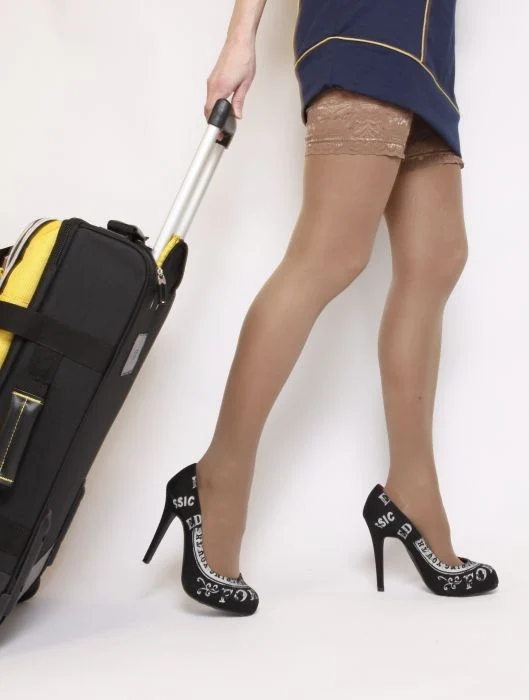
    Woman wearing nude thigh high compression socks with lace top while pulling a travel suitcase.

    Understanding Compression Levels

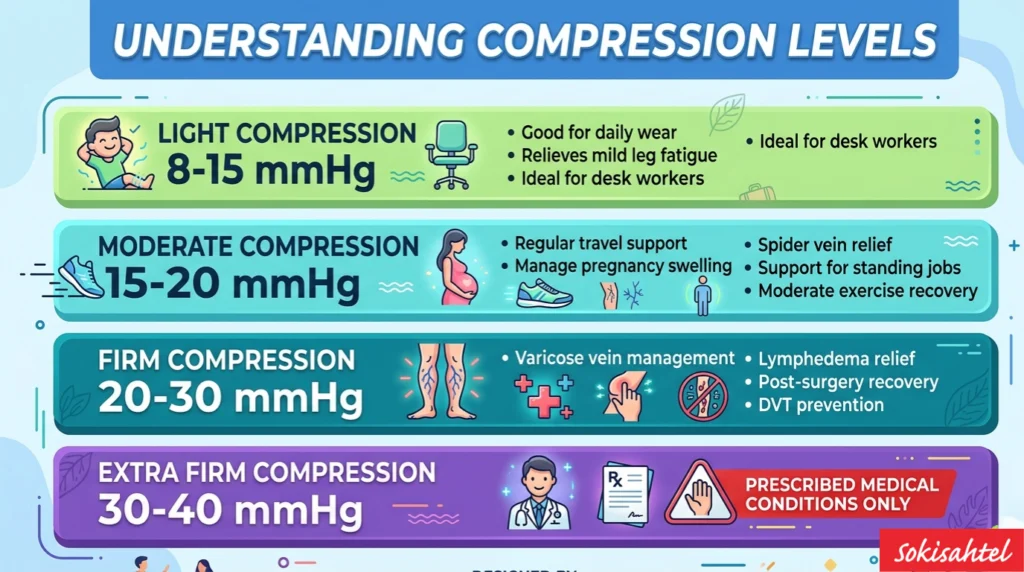
    Compression is measured in millimeters of mercury (mmHg), the same unit used for blood pressure. Higher numbers mean stronger compression. Choosing the right level depends on your specific needs:

    8,15 mmHg (Light Compression)

    This is the entry point, often called “support hosiery.” Light compression provides a gentle squeeze that helps with mild swelling, tired legs after a long day, and preventive support during travel. No prescription needed. This level is ideal for people new to compression or those who simply want more comfortable everyday hosiery.

    Good for: daily wear, mild leg fatigue, desk workers, light travel support.

    15,20 mmHg (Moderate Compression)

    The most popular level for non-medical use. Moderate compression meaningfully reduces swelling, prevents varicose veins from worsening, and provides solid support during travel and pregnancy. This is the level most travelers and office workers find most comfortable and effective.

    Good for: regular travel, pregnancy swelling, spider veins, standing jobs, moderate exercise recovery.

    20,30 mmHg (Firm Compression)

    This is the first level that’s commonly prescribed by doctors. Firm compression is used for existing varicose veins, moderate to severe edema (swelling), post-surgical recovery, and DVT prevention in high-risk patients. While available without a prescription, it’s wise to consult a healthcare provider before wearing this level regularly.

    Good for: varicose veins, lymphedema, post-surgery recovery, DVT prevention.

    30,40 mmHg (Extra Firm Compression)

    Medical-grade compression that should only be worn under medical supervision. Used for severe varicose veins, deep vein thrombosis treatment, severe lymphedema, and post-thrombotic syndrome.

    Good for: prescribed medical conditions only.

    Compression levels chart for thigh high compression socks showing light, moderate, firm, and extra firm mmHg ranges.

    How to Choose the Right Size

    The most common complaint about thigh-high compression socks? They slide down. And in almost every case, the cause is incorrect sizing. Compression socks are not like regular socks, you cannot simply buy “medium” and hope for the best. You need actual measurements.

    What to Measure

    Take these measurements first thing in the morning, before any swelling occurs:

    Ankle circumference, measure at the narrowest point, just above the ankle bone.

    Calf circumference, measure at the widest point of your calf muscle.

    Thigh circumference, measure at the widest point of your thigh, usually about 5 cm below the groin.

    Leg length, measure from the floor to the point where you took your thigh measurement.

    Sizing Tips

    Every manufacturer has slightly different size charts, so always check the specific brand’s sizing guide. A few universal tips:

    If you’re between sizes, size down for a more secure fit (compression socks shouldn’t be loose) unless you have circulatory conditions, in that case, ask your doctor.

    Your measurements should match at all points. If your ankle says “Medium” but your thigh says “Large,” you may need a different brand or style that accommodates your proportions.

    Open-toe styles offer more flexibility in fit because they don’t need to accommodate toe length.

    How to Keep Thigh Highs from Sliding Down

    Even with correct sizing, thigh-high compression socks can be tricky to keep in place. Here are proven solutions:

    Silicone grip bands. Most quality thigh-high compression socks have a silicone-lined band at the top that grips the skin. This is by far the most effective stay-up mechanism. Look for socks with a wide (3,5 cm) silicone band rather than a narrow strip.

    Apply to dry skin. Compression socks grip best on clean, dry, lotion-free skin. If you use body lotion, let it absorb completely before putting on your compression socks, or apply lotion only below and above where the grip band sits.

    Body adhesive. Medical-grade body adhesive (similar to what’s used for medical tapes) can provide extra security for very active wearers. A small amount applied where the band sits keeps socks locked in place all day.

    Correct donning technique. Gather the sock from the top down to the toe, place your foot in, and gradually smooth the fabric up your leg. Don’t pull from the top, this stretches the sock and compromises the compression gradient.

    Thigh High Compression Socks for Specific Needs

    For Travel

    Long flights and road trips are the most common reason people buy their first pair of compression socks. For travel, 15,20 mmHg provides effective DVT prevention without being uncomfortable during a multi-hour journey. Choose a style with moisture-wicking fabric (merino wool or specialized synthetics) and a comfortable, non-restrictive top band.

    Wearing compression socks during travel is recommended by aviation medicine specialists for any flight over 4 hours, and especially for travelers with additional risk factors like recent surgery, pregnancy, or a history of blood clots.

    For Pregnancy

    Pregnancy dramatically increases blood volume while hormonal changes relax blood vessel walls, a combination that leads to swelling, varicose veins, and heavy legs. Thigh-high compression in the 15,20 mmHg range is safe for most pregnancies and provides relief that knee-highs can’t fully deliver.

    Look for maternity-specific compression hosiery if possible, as these are designed for changing body proportions. Soft-top bands are essential for comfort as your body changes throughout pregnancy.

    For Athletic Recovery

    Post-workout compression helps clear metabolic waste from muscles and reduces delayed onset muscle soreness (DOMS). For recovery, 15,20 mmHg is sufficient. Many athletes wear thigh-high compression for 2,4 hours after intense training.

    During exercise itself, some runners and cyclists prefer lower compression (8,15 mmHg) for support without restricting movement. This is a matter of personal preference, the research on compression during activity is mixed, but the evidence for post-exercise recovery benefits is more robust.

    For Medical Conditions

    If you’re wearing compression for varicose veins, lymphedema, or post-surgical recovery, your doctor should specify the compression level and style. Medical-grade thigh-high compression (20,30 or 30,40 mmHg) requires proper fitting and monitoring.

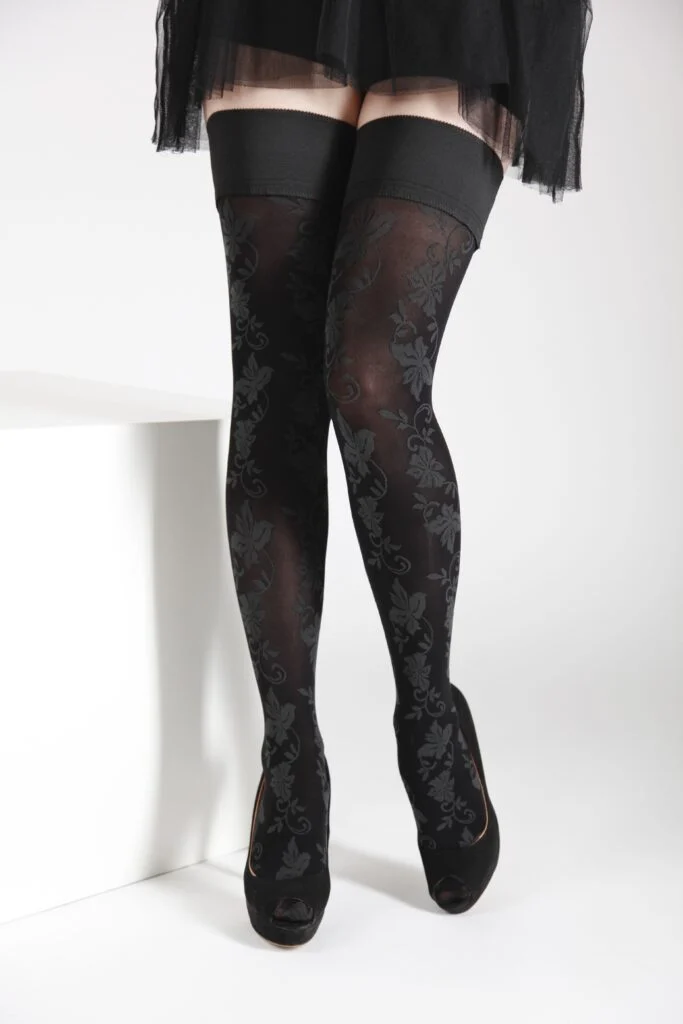
    Woman wearing black floral thigh high compression socks with black heels and a sheer black skirt.

    Caring for Compression Socks

    Compression socks lose their effectiveness over time as the elastic fibers break down. Proper care extends their compression life:

    Wash after each wear, body oils and sweat degrade elastic fibers. Hand washing in cool water with mild soap is ideal. Machine washing on a gentle cycle in a mesh bag is also acceptable.

    Never use fabric softener, it coats the elastic fibers and accelerates the loss of compression.

    Air dry only, heat from dryers damages the elastic material. Lay flat or hang to dry away from direct sunlight.

    Replace every 3,6 months with regular wear. Even with perfect care, compression socks gradually lose their graduated pressure. If your socks feel loose or slide down more easily, it’s time for new ones.

    Have at least two pairs so you can alternate daily while one pair washes and dries.

    Frequently Asked Questions

    Can I sleep in thigh-high compression socks?
    Generally no, unless your doctor specifically recommends it. When you’re lying down, gravity isn’t working against your circulation, so compression isn’t needed. Some post-surgical patients are exceptions, follow your doctor’s instructions.

    Are thigh-high compression socks better than knee-high?
    They provide more coverage but aren’t necessarily “better” for everyone. If your concerns are limited to lower leg swelling and foot fatigue, knee-highs work perfectly well. Thigh-highs are specifically better when you need upper leg support or full-leg DVT prevention.

    Do compression socks help with varicose veins?
    Compression socks don’t cure varicose veins, but they effectively manage symptoms, reducing pain, swelling, and the heavy feeling. They can also slow the progression of varicose veins and prevent new ones from forming.

    How tight should compression socks feel?
    Firm but not painful. You should feel noticeable pressure at the ankle that gradually decreases up the leg. If your toes tingle, go numb, or turn blue, the socks are too tight. If they feel no different than regular socks, they may be too loose or the wrong size.

    Can I wear thigh-high compression socks with skirts and dresses?
    Absolutely. Modern compression hosiery comes in sheer, fashionable styles that look identical to regular thigh-high stockings. Many brands now offer compression in skin tones, patterns, and even lace-top designs that are stylish enough for professional and social settings.

    Are Thigh High Compression Socks Worth It?

    Thigh-high compression socks are one of those products that work exactly as advertised, when you get the right size and compression level. They’re not a magic cure, but they’re a proven, evidence-based tool for better circulation, reduced swelling, and more comfortable legs.

    Start with 15,20 mmHg if you’re new to compression. Measure carefully. And give your legs a few days to adjust, the graduated pressure feels unusual at first, but most people quickly find that their legs feel lighter and more energetic by the end of the day.

    Shop our compression and thigh-high collection for European-quality compression socks. Free shipping on orders over €40.

    Keep Reading

    Want to learn more about compression socks and how they can improve your daily comfort?

  • A Special Look at Maternity Tights: Fit and Support

    A Special Look at Maternity Tights: Fit and Support

    Maternity tights are an essential part of the maternity wardrobe, offering comfort, support, and style to accommodate a growing belly. This article explores the key comfort features of maternity tights to help expectant mothers find the perfect fit.

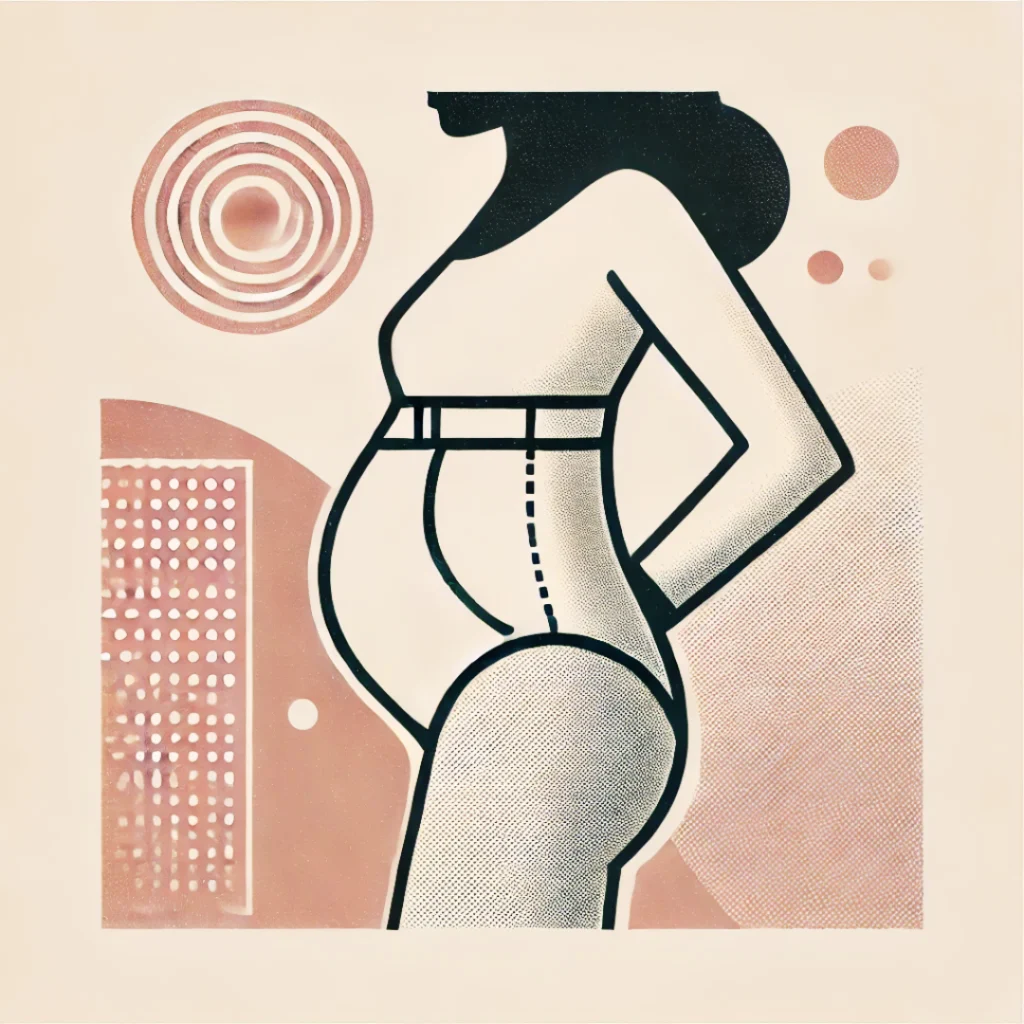
Illustration of a woman in maternity tights

Key Takeaways

  • Understand the importance of choosing the right fit and size for maternity tights to ensure comfort throughout different stages of pregnancy.
  • Look for maternity tights with support bands and adjustable features to provide necessary support and adapt to your changing body.
  • Opt for high waistbands and compression levels that offer additional support and help maintain comfort during daily activities.
  • Consider the material of the tights, ensuring they are breathable, stretchable, and suitable for your lifestyle whether opaque or sheer.
  • Style maternity tights appropriately for various occasions, leveraging their versatility to maintain both comfort and fashion.

Understanding Maternity Tights Comfort Features

Choosing the Right Fit

When selecting maternity tights, it’s crucial to choose a size that accommodates your growing belly without causing discomfort. Look for tights with adjustable waistbands to ensure a perfect fit throughout your pregnancy.

Key Features to Look For

Maternity tights should offer both comfort and support. Features like high waistbands and breathable fabrics are essential. Additionally, consider tights with opaque fabric to maintain modesty and confidence.

Support and Style

Maternity tights not only provide physical support but also enhance your style. They can be paired with various outfits, from casual to formal, making them a versatile choice for any occasion.

The Importance of Proper Fit

Soft and comfortable maternity tights

Sizing During Pregnancy

During pregnancy, your body undergoes significant changes, making it crucial to choose maternity tights that adapt to your growing belly and provide comfort. Ensure the tights have a flexible sizing guide to accommodate these changes without compromising on support or style.

Adjustable Features

Maternity tights with adjustable features such as drawstrings or expandable waistbands are essential. These allow you to modify the fit as your body changes, ensuring comfort throughout your pregnancy.

Ensuring Day-Long Comfort

To maintain comfort all day, select maternity tights that are snug but not too tight. Look for features like breathable fabrics and adequate stretch, which prevent discomfort and adjust to your body’s movements.

Remember, the right fit not only enhances comfort but also supports your changing body during this special time.

Support Features in Maternity Tights

Support Bands

Support bands in maternity tights are crucial for providing the necessary support to the abdomen and lower back. These bands are typically wide and stretchy, designed to adapt to your growing belly without causing discomfort or restricting movement. They help distribute the weight of the belly evenly, which can alleviate back pain and provide a sense of stability.

High Waistbands

High waistbands are another essential feature of maternity tights. They provide extra coverage and support over the belly, ensuring the tights stay in place throughout the day. This feature is particularly valuable as it prevents the tights from rolling down or pinching, which can be a common issue with regular tights during pregnancy. High waistbands also offer a smooth silhouette under clothing, enhancing both comfort and appearance.

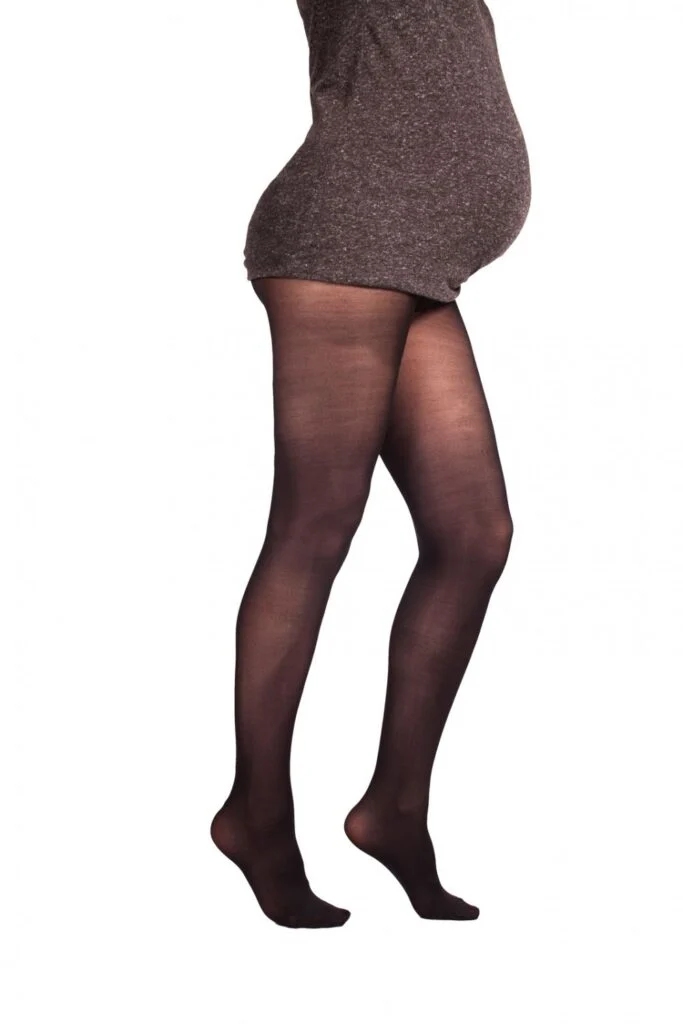
A woman in maternity tights with high waist

Compression Levels

Maternity tights come in various compression levels to suit different needs. Light compression can help with blood circulation and reduce swelling, especially beneficial during long periods of standing or sitting. Moderate to high compression options are available for those who require more substantial support. It’s important to choose a level that feels comfortable and does not restrict your movement or circulation.

Material and Fabric Choices

Breathable Fabrics

Choosing the right fabric for maternity tights is crucial for comfort and health. Breathable fabrics like cotton and bamboo allow for better air circulation, which helps in reducing sweat and discomfort during pregnancy.

Stretchability

The need for stretchability cannot be overstated. Fabrics that stretch, such as spandex and elastane, accommodate growing bellies comfortably, ensuring the tights can be worn throughout the pregnancy without restricting movement.

Opaque vs. Sheer Options

When selecting maternity tights, consider the opacity. Opaque tights offer more coverage and support, making them suitable for everyday wear. Sheer tights, while stylish, might not provide the same level of support but are perfect for formal occasions.

Different properties of fabric

Styling Maternity Tights for Different Occasions

Casual Outfits

Maternity tights are a staple for casual wear, offering both comfort and style. Pair them with a cozy sweater or a loose tunic for a relaxed look. They are also great with oversized shirts or long cardigans, providing a stylish yet comfortable outfit suitable for everyday activities.

Formal Settings

For more formal occasions, maternity tights can be elegantly styled with dresses or skirts. Opt for opaque tights to ensure coverage and confidence. Adding a smart blazer or a sophisticated dress can transform your outfit into one that is both professional and accommodating to your changing body.

Formal style tights.

Layering Tips

Layering is key when styling maternity tights, especially during colder months. Start with a comfortable base layer like a maternity tank top, then add your tights and a dress or skirt. Top it off with a cardigan or jacket for extra warmth. This approach not only keeps you warm but also allows you to adjust your outfit as needed throughout the day.

Incorporating Comfort into Maternity Fashion

Blending Style and Comfort

In the world of maternity fashion, the harmony between style and comfort is paramount. Comfort is key, but it doesn’t necessitate a compromise on style. Many maternity wear options are designed to be both chic and comfortable, ensuring that expectant mothers feel both attractive and at ease.

Illustration with a woman figure wearing maternity tights in office environment

Versatility in Maternity Wear

Maternity clothing should not only be comfortable but also versatile. It’s important to have pieces that can adapt to various settings and stages of pregnancy. This includes items that can be easily dressed up or down, depending on the occasion.

Transitioning Through Trimesters

As pregnancy progresses, the need for adaptable clothing becomes more apparent. Maternity tights and other garments should accommodate growing bellies comfortably, allowing for a smooth transition through each trimester without sacrificing style or comfort.

Shopping Tips for Maternity Tights

Where to Buy

When looking for maternity tights, you have a variety of options. Online stores often offer a wide selection, allowing you to compare different brands and styles from the comfort of your home. Local maternity stores and department stores also stock maternity tights, providing the opportunity to try them on before purchasing.

What to Avoid

It’s important to steer clear of tights that are too restrictive or made from non-breathable materials. Avoid tights with tight waistbands or those that lack elasticity, as they can be uncomfortable and may hinder circulation.

Evaluating Quality and Comfort

To ensure you’re getting the best value, look for tights that offer supportive features like high waistbands and breathable fabrics. Check customer reviews to gauge the comfort and durability of the tights. Remember, investing in quality maternity tights can significantly enhance your comfort during pregnancy.

CONCLUSION

In conclusion, maternity tights are a must-have for any working mom-to-be. They provide comfort, support, and style all in one, making them the perfect addition to your maternity wardrobe. So, embrace your changing body, feel confident and empowered, and invest in a pair of stylish and comfortable maternity tights today. Trust us, you won’t regret it!

Frequently Asked Questions

What should I consider when choosing the right fit for maternity tights?

When shopping for maternity tights, consider your current stage of pregnancy and personal comfort preferences. Key factors include size, fit, and the ability to accommodate your growing belly comfortably.

Frequently asked questions

What are some key features to look for in maternity tights?

Look for maternity tights with support bands for back and belly support, adjustable options for growing bellies, and compression levels to aid in comfort and circulation.

How can I ensure my maternity tights are both comfortable and stylish?

Choose maternity tights that blend style with comfort. Look for options that are stretchy, breathable, and come in various styles like sheer or opaque to suit different outfits and occasions.

What are the benefits of high waistbands in maternity tights?

High waistbands in maternity tights provide gentle support to your growing belly and help keep the tights from slipping down, ensuring comfort throughout the day.

How should I style maternity tights for different occasions?

Maternity tights are versatile and can be styled for any occasion. Pair them with a blouse and blazer for a professional look, or with a cozy sweater for a casual vibe. They also pair well with dresses to add warmth in colder months.

What should I avoid when shopping for maternity tights?

Avoid maternity tights that are too restrictive or lack adjustable features, as they may not provide the necessary comfort or adaptability as your body changes throughout pregnancy.

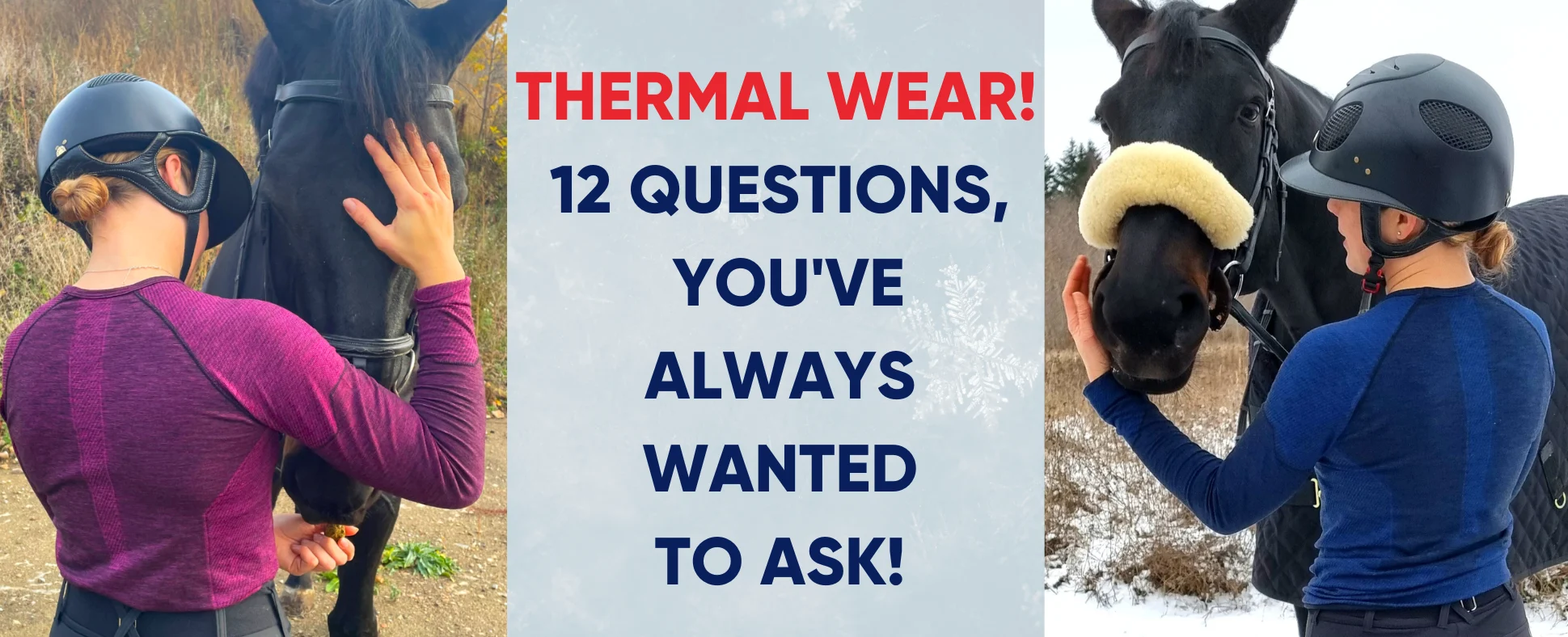
  • Thermal wear for men and women: 12 important questions and answers!

    Thermal wear for men and women: 12 important questions and answers!

    If you enjoy cool weather and spend a lot of time outside, thermal underwear is a real lifesaver! It helps to keep warm and protects you from unpleasant sensations in cold weather conditions. How to choose the right warm underwear? What materials is it made of? Are there differences in men’s and women’s thermal underwear? Is it important for the elderly to use thermal wear?

    Read on for the 12 most frequently asked questions about thermal underwear to help you choose the right kit for your needs, allowing you to enjoy walks, vacations or your favorite sports in the open air and in all weather conditions.

    Thermal underwear

    What is thermal wear? And how does it work?

    Thermal underwear is clothing that helps the body retain heat in cold weather. It is made of special materials that trap heat and prevent it from escaping. Thus, thermal wear creates an insulating layer that allows the body to retain heat and feel comfortable in cold conditions.

    How to choose the right size for thermal wear?

    To choose the right size thermal wear, it is necessary to measure the chest circumference, waist and hip size and compare them with the manufacturer’s size chart. In addition, make sure that the warm clothes are against the skin, but not too tight, so that the use is as comfortable as possible and the warm clothes can keep you warm. In Sokisahtel, you can find thermal underwear sizes XS-XXL, in different colors and materials!

    Can thermal clothing be washed in a washing machine?

    Most thermal clothing can be machine washed, but be sure to check the washing instructions on the product label before washing to avoid damaging the material. It is recommended to use a gentle wash program and not to use bleaching or rinsing agents, which can damage the fabric and spoil its properties. If your purchased warm underwear contains merino wool, you should ensure that the water temperature does not exceed 30 degrees, and the thermal clothing should also be dried on a smooth and flat surface. Proper and careful care of clothes helps maintain their presentable appearance and extend the product’s service life.

    How often should you wash thermal wear?

    It is usually recommended to wash the thermal underwear after each use, especially after physical activity, to remove odors and bacteria. Thanks to the special properties of merino wool and polyester, warm underwear can be washed after several wears, if it has only been used as an extra layer under other clothing. The material of the merino wool laundry is antibacterial and thanks to this it also keeps bad odors at bay.

    What is thermal wear made of?

    Thermal wear can be made from a variety of materials, including natural, synthetic and combined options. Some of the most common thermo wear materials include merino wool, polyester, polyamide and elastane, which provide good thermal insulation, moisture absorption and wearing comfort. Our especially warm LANA collection contains exactly these components. Let’s talk more about the two main components of Sokisahtel thermo clothing: polyester and merino wool. For extra warmth, choose merino wool socks and wrap a nice alpaca wool scarf around your neck!

    Polyester in thermal wear

    A popular material for the production of thermal underwear. It allows air to pass through, dries quickly, is resistant to wear, soft and light. In addition, it does not absorb odors and ensures a comfortable body temperature during sports and active lifestyle.

    Merino wool in thermal wear

    Merino wool is a durable and soft material that is ideal for making thermal underwear. It has unique thermoregulatory properties that allow you to maintain a comfortable body temperature. In addition, it does not cause allergies, absorbs moisture perfectly, does not absorb odors and does not require special care.

    Merino wool thermo wear with polyester

    Allows to combine the good properties of both materials. Merino wool ensures thermoregulation and absorbs moisture, while polyester dries quickly, is resistant to wear and deformation, as well as light and soft. These two components successfully complement each other. This thermo wear is comfortable in any situation in any weather!

    Merino wool in thermal wear

    Do you need to wear something under your thermal wear?

    Thermal wear can usually be worn without putting anything on first. If you need extra protection or support, you can wear underwear or corrective underwear under thermal clothing to improve comfort. But remember that the underwear under thermal wear must also conduct moisture well.

    Is thermal wear suitable for wearing as regular clothing?

    Some manufacturers create thermal wear with a design and cut that allows it to be worn as a separate garment. However, in most cases, thermal clothing is designed to be worn under other items to ensure body thermoregulation and protection from the cold. In the end, however, it remains your choice whether the thermal clothes are suitable for wearing separately or only under other clothes. Watch out for see-through material!

    thermal wear
    lana-merino-wool-thermal-shirt
    lana-dark-pink-merino-wool-thermal-blouse

    Which clothes should be worn over thermo wear?

    Which layer of clothing to wear over the thermal wear depends on the weather conditions and the intensity of the activity. It mainly depends on the air temperature and the degree of physical activity. It is important to choose a suitable warming and protective layer for specific conditions. Sokisahtel’s thermal wear models cover air temperatures from -15 to +20 degrees. From mid-spring to early autumn, the ENERGY series, which is made of lighter materials, is suitable. This model is best when the thermometer stays above zero (up to +20 degrees). From mid-autumn to early spring, it is good to use the LANA series. It contains high-quality merino wool and keeps the body warm even at -15 degrees!

    women’s thermal wear

    How warm is thermal wear and is it suitable for extreme conditions?

    Thermal wear was created to help the body retain heat in cold weather conditions. It can keep warm in a wide temperature range, depending on the thickness of the fabric and the quality of the materials. However, in extreme conditions, such as Arctic expeditions, special thermal clothing with a higher level of thermal insulation could be used. In the north, several layers of clothing are generally used, not just one or two layers. In such a set, one layer could be a merino wool shirt and merino wool leggings.

    How does women’s thermal wear differ from men’s thermal wear?

    Women’s thermal wear usually has a silhouette that takes into account the anatomy of the female body, it narrows at the waist and widens at the hips. Also, its design and colors may be more vivid than men’s. But in general, the materials and technologies used to make thermal clothing are similar for both men and women.

    Can thermal underwear be worn in summer or in warm climates?

    The thermal underwear set is designed to keep you warm in cold weather, so it is not necessary to wear it in hot weather. However, in some cases, such as fluctuating temperatures and intense sports in cool weather, a thermal wash can be useful for wicking away moisture and for use as a breathable layer. Our ENERGY series is specially designed for this purpose and can be used at temperatures up to +20 degrees. In warm climates, avoid activities in direct sunlight, drink more water and protect your body from overheating!

    Should older people wear thermal underwear?

    Yes, older people are advised to wear thermal clothing in cold weather. Thermal clothing helps maintain body heat, which is especially important for older people, who may have more difficulty keeping their body warm and regulating their temperature. As a result, the risk of colds and other cold injuries also decreases.

    thermalwear for men
    thermalwear for men
    thermalwear for men

    Bonus question: why choose thermal wear from Sokisahtel?

    Sokisahtel’s thermal wear is a great choice for those looking for clothing that keeps them warm in cold weather. Thanks to its thermoregulating ability, it is suitable not only for sports, but also for everyday wear. Antibacterial fabric provides protection against unpleasant odors. Also, properly made ergonomic seams ensure a comfortable fit and do not rub the skin. If you are looking for thermal clothing that combines functionality, comfort and quality, you should check out Sokisahtel’s thermal clothing!

    Thermal clothing is the perfect way to keep warm in all weathers, and it’s not just for athletes! Regardless of age and activity level, wearing warm underwear can benefit everyone. Now that you know how to choose, wash and wear thermal clothing correctly, you can enjoy walks in the fresh air even when the temperature drops below zero. So don’t put off buying thermal clothing – it’s really clothing that can improve the quality of life in cold weather, keep your loved ones healthy and well, and make your outdoor adventures more comfortable!

  • Thigh Bands – the Source of Confidence

    Thigh Bands – the Source of Confidence

    Summer is approaching and weather is only getting warmer. Hopefully, it’s time to hide the thick and warm pants in the corner of the closet for a long time and take out summer clothes. Dresses, skirts, shorts, they are all very nice, but if your thighs rub against each other on a hot summer day, the situation can suddenly get quite unpleasant. Not to worry, because we have a simple and convenient solution against friction , thigh bands.

    What are thigh bands and why are they needed?

    In warm weather, rubbing thighs can cause great discomfort and spoil the mood for the whole day. Thus, a number of solutions have been developed that could help against friction. All of those creams, shorts, greases and powders may well also help. But one thing we can say is that our thigh bands help, too. So many customers have given feedback after their purchase, saying that thigh bands have saved them from awkward situations and are now an essential part of their wardrobe! What makes thigh bands even more useful is that they can be used perfectly in any situation, in warm summer weather, for doing sports, as well as during festive events!

     thigh bands

    Those pretty little things , thigh bands (also known as thigh protectors or hamstrings), are anti-friction protectors made of breathable lace or microfiber. The bands help to keep inner thighs from rubbing against each other. Rubbing causes redness, chafing, and pain in the skin, which no one wants! Our thigh protectors help protect your legs and skin.

    How do thigh bands work?

    You pull the thigh-bands on your thighs and walk all day without any worries and without any friction or discomfort! Our thigh protectors are made of breathable material and are primarily designed to be worn in warm summer weather to protect the skin on your thighs. Two narrow silicone strips (one at the top, the other at the bottom) help to keep the thigh bands up.

    thigh bands

    Don’t thigh bands slip down?

    In order for the thigh bands to stay comfortably on the leg and not slip down in any situation, it is necessary to find the size that fits you best. With the right size thigh bands, you can be completely worry-free! They will stay firmly in place. Our lace thigh protectors even have a double silicone strip both at the top and bottom to ensure comfort and security. These special silicone strips do not allow the thigh bands to sink, even when doing sports, whichever model you choose!

    We will also add a size chart for you here so that you can be completely sure.

    How to choose the right thigh bands?

    There are lots of different models of thigh bands and protectors, so there is plenty of choice! But how to choose the right thigh bands? Which ones should you choose if you want to do specific sports or look more elegant? Don’t worry, we’ve thought of and brought to you all kinds of thigh bands to make the choice easier!

    BESTSOCKDRAWER lace anti-friction thigh bands

    These lace thigh protectors have proven to be the most popular among our customers! These stylish, elegant lace thigh bands are suitable for any situation. You can wear them both under a cute dress on a warm summer day, or under a skirt or dress during festive events.

    Our lace thigh protectors even have a double silicone strip, which ensures comfortable wearing. Available in black, beige, or white.

    BESTSOCKDRAWER lace anti-friction thigh bands

    PLAIN anti-chafing thigh bands

    If you are looking for something modest and comfortable and are not a big friend of lace, then PLAIN bands are a great choice. These thigh protectors come in nude and black. Ideal for wearing in summer weather, as well as for garden work where there is a lot of movement! And, of course, for sports!

    PLAIN anti-chafing thigh bands

    BREATH easily breathable anti-friction thigh bands

    Now, in addition to lace thigh bands, we also have a selection of especially designed thigh protectors that allow the skin to breathe better. These thigh protectors are made of thinner, breathable material so that they can be used in any situation! On a hot summer day, at festive events, as well as when doing sports! These thigh bands are the best and most comfortable ones for sports. These pretty little things also have narrow silicone strips at the top and bottom edge to keep them from slipping down but are primarily designed in such way that you don’t even feel like you’re wearing them!

    BREATH easily breathable anti-friction thigh bands

  • Socks For an Active Lifestyle – a Guide!

    Socks For an Active Lifestyle – a Guide!

    We all have heard that it is very important to have the right footwear when doing sporty activities or having an overall active lifestyle. The correct shoes may be helpful towards your goals or just keep you healthy through correct posture etc. There are many different options of shoes for different activities – golf shoes, walking and running shoes, gym, and indoor shoes and the list goes on. But what about socks? Should you just throw on some regular cotton ones from your sock drawer or are there some other and more comfortable options available? We’ll help you out!

    Best socks for outdoor activities

    such as walking, running and hiking. Certainly, the most important purpose of your outdoor clothing should be to keep you warm and endure for a while! No one wants their legs to be wet after a hike nor a hole in their socks after a run in the forest! At BestSockDrawer we have chosen our Merino wool socks to be the best for outdoor activities. Merino wool is known to be thinner than regular wool but sure keeps you as warm! Thanks to its thinness, the merino wool socks are very comfortable to wear even in your running shoes and they are very breathable, which means your feet will stay dry even after a sweatier workout!

    Best socks for outdoor activities
    Best socks for winter sports

    Best socks for winter sports

    Continuing with outdoor activities, we move onto winter sports! Long days out on the mountain or playing in the snow for hours – either way, your feet need to stay warm unless you want to spend the next day treating a cold. Did you know that you lose most of your body heat through your hands and feet, not through your head? Meaning it’s still important to wear a hat outside in frosty temperatures, but even more important to have warm gloves and socks. For winter activities we have chosen the best to be the Alpaca and Angora wool socks! Layering multiple pairs of cotton and regular wool socks may make your leg feel bulky and thus uncomfortable. That’s not the case with our alpaca and angora wool socks! Both of them keep you warm, comfy, and dry even throughout a long day in the snow.

    Socks for indoor activities

    Moving onto indoor activities, many gym-lovers tend to prefer short socks to longer ones, which are more comfortable in some shoes. For those, we have chosen our MONDI and BAMBOO short socks. Mondi socks are perfect for running and activities which require more movement, such as HIIT and Cardio training. These socks have an elastic between the heel and the flat of the foot, which helps to prevent them from slipping off inside your shoe. For indoor sports that are not as fast-paced, we recommend our Bamboo short socks. These socks are very soft and breathable and make you feel like you’re walking on cloud nine. Our bamboo socks are available both in sporty short style or a bit longer ones. Find your perfect match on our site!

    Socks for ball game players

    Some people like having more support on their legs or keeping their ankles warm when sporting, like weight-lifters or ball game players. For those, we have our TENNIS socks, which have a thicker sole and beautiful ribbed edge. These features soften the impact on the sole and heel and provide additional support to the ankles. Resulting in minimizing the weariness on the legs to as little as possible.
    Many basketballers and tennis players have chosen these as their favourite workout socks throughout the whole year – indoor and outdoor season! Our Tennis socks are available in white and black colour, which makes it easy to match them with any of your workout clothes and shoes.

    Socks for the mind and body

    Last but surely not least – perfect socks for Yoga! Many of us love doing Yoga to keep the stress levels low and use your body to the fullest. While doing yoga, it is not very comfortable to wear shoes and not all of us enjoy doing it barefoot as well. If you feel the same, we’ve got you covered! We have specially designed socks with anti-slip soles, to complete your movements without slipping. As many of our clients requested, we made toe socks with anti-slip soles which have been arguably the favourites of our yoga-loving clients! In addition to toe socks, we also have regular socks with anti-slip soles to give you the best grip while doing your movements. Our EXHALE yoga socks have a fun and cute design perfect for your yoga classes. If you want something more modest to wear, we also have regular Olev socks, available both in short and long style! Find your next perfect yoga socks from our site.

    Socks for the mind and body

    It is important to keep your body and mind healthy by moving actively daily. Also, it is important to keep in mind that the correct gear for your activity is essential to get the most pleasure from your movement. We hope that you find the perfect socks for your activities, keep your legs moving and your mind clear!

  • Join our newsletter Be the first to know about new products and offers.